
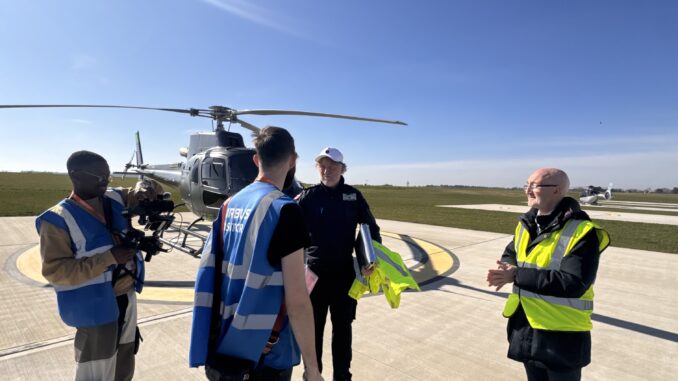
by Anastasiia Savina
For most passengers, aviation begins at the departure gate and ends when the plane lands. But behind every flight is an enormous system of airport management, pilots, engineers, operations teams and aviation specialists working together to keep the industry moving.
From Heathrow’s highly choreographed operations to helicopter rescue missions and luxury aircraft experiences, the UK aviation industry is far more complex than many travellers realise.
Professionals working across the field say aviation has transformed dramatically over the last few decades becoming not only a transport system, but also a global commercial industry competing for passengers, airlines and international influence.
Nick Coleman, Course Leader in Aviation Management at London Metropolitan University, explained how airports today function far beyond their original purpose.
“Airports globally are seen as commercial opportunities because of the revenue earning potential of services like car parking, catering and tax free retail,” he said.
According to Coleman, the UK’s largest airports now compete directly with each other to attract airlines and routes.
“The UK has privatised all major airports including Heathrow, Gatwick and Stansted in London. This means that these airports compete against each other to attract new airlines and new services.”

Nick Coleman, Course Leader in Aviation Management at London Metropolitan University. Photo courtesy of London Metropolitan University
Coleman also described how modern aviation has changed the way people experience travel itself.
“The biggest change from the 1980s to today is the introduction of de-regulated travel markets and low cost airlines such as Ryanair in Europe and Southwest in the USA.”
Low-cost airlines transformed flying from a luxury experience into something accessible to millions of travellers. The growth of affordable air travel has also changed the social and cultural role of aviation. Flying, which was once considered exclusive and financially inaccessible for many people, has now become part of everyday life for millions across Europe and beyond. As a result, airports have evolved into large international spaces where business, tourism and global mobility intersect continuously.
Airports as a commercial space
Airports today are no longer simply spaces people pass through, but large commercial environments designed around passenger flow, retail, and global connectivity.
At the same time, the pressure on airports has increased enormously. Heathrow alone handles thousands of aircraft movements every week.
“The operation of Heathrow is based on 100 years of airport management experience,” Coleman said. “It is a highly choreographed management of every departing and landing aircraft.”
Modern aviation also depends heavily on technology and communication systems operating simultaneously behind the scenes. Airport management teams coordinate security, baggage handling, air traffic schedules, maintenance and passenger services at the same time, often under significant pressure and strict time limits.
As global travel continues growing, airports are increasingly required to balance commercial development with environmental concerns, passenger safety and operational efficiency. Experts within the industry believe future airports will become even more technologically advanced, with greater automation and digital systems shaping how passengers travel.
The aviation world behind the scenes can often feel invisible to passengers, but pilots and aviation workers experience a very different reality.
Barry Flower, a helicopter pilot connected with Airbus Helicopters, described aviation as both technically demanding and emotionally memorable.
One of his most unusual experiences involved transporting high-profile passengers.
“I’ve flown Formula One drivers and pop stars, but Jeremy Clarkson was very amusing,” he said. “A huge privilege and highlight however was showing Prince William around our H160 helicopter at the opening of our new facility at Oxford.”
Barry Flower explains the structure and operation of an Airbus helicopter at Oxford Airport. Video by Anastasiia Savina
Flower also explained that some of the most difficult work in aviation happens far away from public attention.
“I’ve flown casualty evacuations and chased cars in high speed pursuits,” he said. “But flying for National Grid with two men in a basket hanging from the helicopter near pylons and wires was probably the most extreme.”
While commercial passengers often associate aviation with holidays and convenience, many pilots experience aviation in situations involving emergency response, infrastructure repair and high-risk operations.
The emotional side of aviation also remains deeply important for many professionals working within the industry.
When asked what moment in aviation history he would most like to witness, Flower immediately referenced the Apollo 11 recovery mission.
“I would have loved to be on board Helicopter 66 used in the recovery of Apollo 11 as it splashed down in 1969 from its return from the Moon mission.”
Sense of wonder
Even after decades of technological advancement, aviation still carries a sense of wonder for many people who work within it.
Kieran Daly, Head of Communications at Airbus Helicopters UK and former editor of Flight International magazine, described one helicopter journey across the United Kingdom as especially unforgettable.
“We were able to see all four nations of the United Kingdom: England, Northern Ireland, Scotland and Wales,” he said. “It was extremely interesting to see so many landmarks passing below us.”
Daly explained that aviation offers a perspective on the country that most people never experience from the ground. While passengers often focus only on reaching a destination, professionals working within the industry see aviation as a complex network connecting infrastructure, technology and people across the UK.
He also reflected on how aviation remains an industry shaped by both innovation and responsibility.
Readers can learn more about the 2015 Airbus A400M crash in Seville here:
Safety a priority
Although aviation technology continues to evolve, accidents and operational risks remain a reality within the industry. Professionals working in aviation management and aircraft operations are required to balance efficiency, safety and constant technological development.
For many people, airports represent far more than transport. They are spaces connected with movement, ambition and international opportunity.
One London resident said aviation had always seemed like an exciting industry because of its global nature and constant activity.
“When I was younger, I thought working in aviation looked exciting because airports connect people from everywhere,” he said. “It feels like an industry that never sleeps.”
Despite the fast pace of change within aviation, many professionals say the human side of the industry remains essential. Pilots, engineers, airport workers and communications teams all play important roles in maintaining public confidence in air travel and ensuring flights operate safely every day.
For passengers, airports may appear routine or stressful places connected only with travel plans and departures. However, for the people working within the industry, aviation represents a highly coordinated environment built on experience, responsibility and constant teamwork.
As airports continue evolving into commercial and technological hubs, aviation professionals believe the industry will only become more complex in the future.
Behind every departure board and landing aircraft is a carefully coordinated system involving pilots, operations teams, engineers, communications specialists and airport management working simultaneously under pressure.
While most travellers only experience aviation from the passenger seat, for the people working behind the scenes it is an entire world built on precision, responsibility and constant movement.
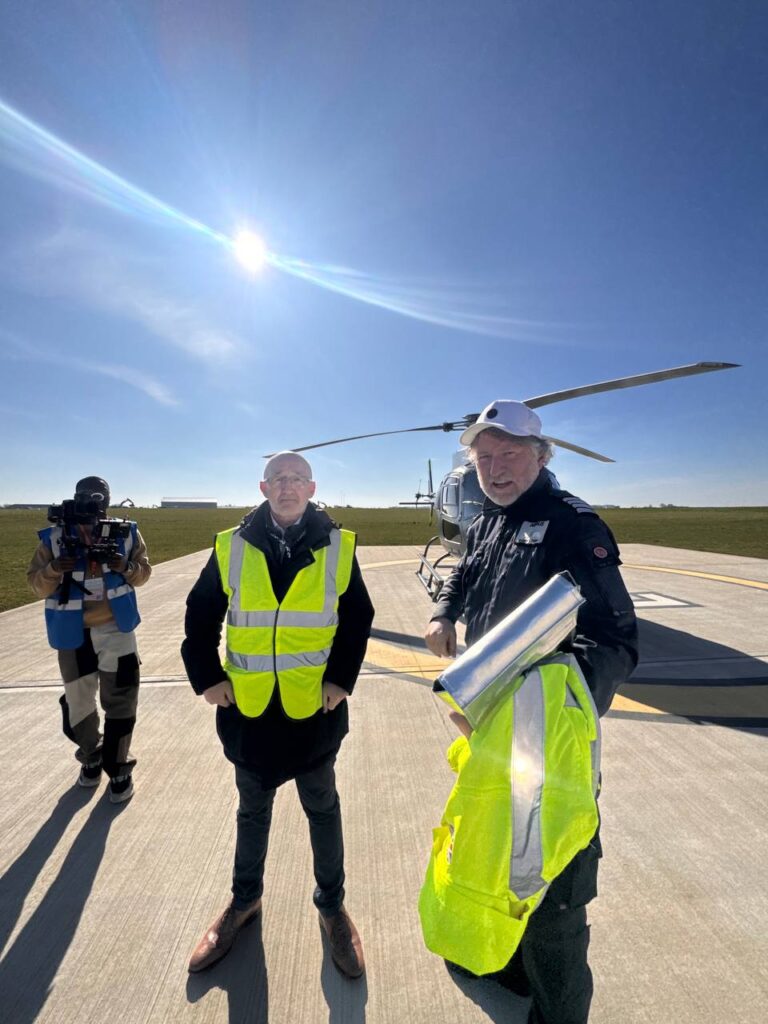
Aviation professionals at Oxford Airport during Airbus helicopter operations. Barry Flower pictured on the right. Photo by Anastasiia Savina
Leave a Reply