

Words, photos and multimedia by Jaskaran Singh
London is a city forged by a multitude of heritages, cultures, and backgrounds, offering a wide range of opportunities and experiences that let people take in perspectives beyond their own. Through art galleries, exhibitions and community events, the beating heart of Great Britain hosts a myriad of spaces where cultural and historical heritage can be shared, explored, understood, and even celebrated with wider and broader audiences.
One example is the Ballad of Chandi exhibition held at SOAS University of London in this month. This explores a text of particular importance within the Sikh religious and literary history. Alongside its depiction of the Chandi Di Vaar, this exhibit offers a chance to experience firsthand how religious historical writings and traditions from other cultures can remain meaningful to a contemporary audience.
As well as a chance to see Sikh historical texts in the modern day, the event also questions how London’s cultural spaces can engage new listeners and younger generations with different cultures and traditions, while exploring the importance of the project and seeing how this exhibit can be used to share historical heritage with different communities.
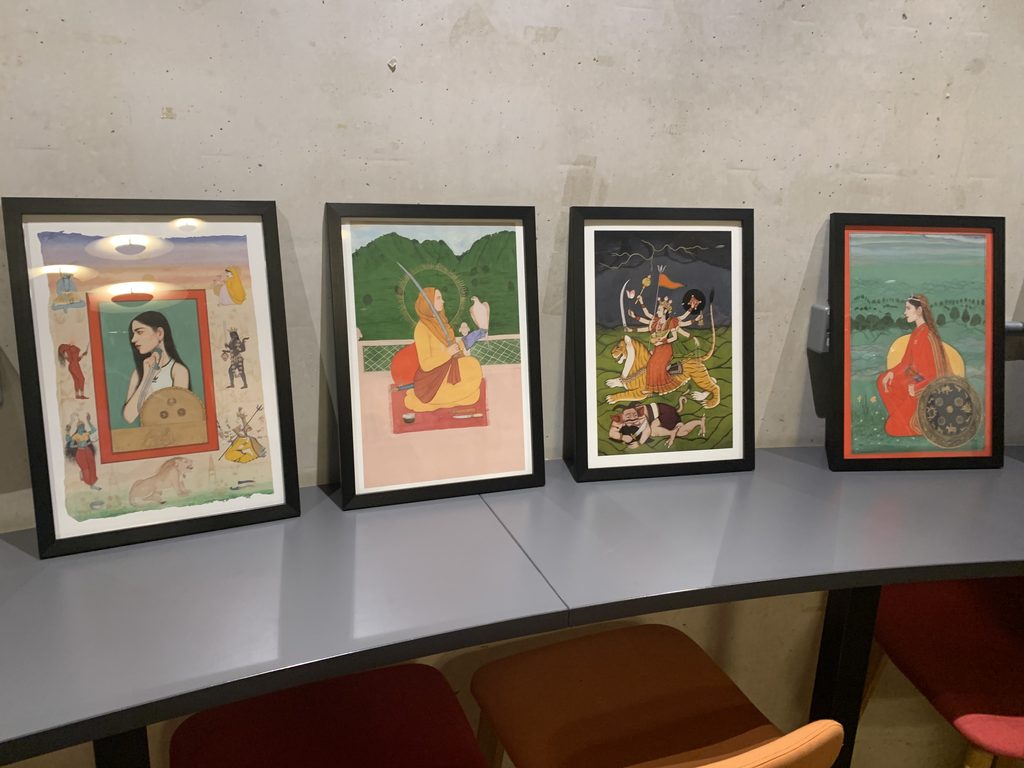
The Ballad of Chandi
At the very heart of this exhibition is The Ballad of Chandi, a fresh translation and commentary on the 17th century Punjabi poems by Guru Gobind Singh by Dr Jvala Singh, with art by Ittvinder Singh. Its core themes explore the importance of how the 10th Sikh Guru tells the mythic battles of the Goddess Chandi and how she restores cosmic order.
The text introduces unfamiliar audiences to the ideas and themes discussed in the book and throughout the exhibition. For Dr Jvala Singh, the book was written to explain the writings of Guru Gobind Singh and how they can be contextualised, with artist Ittvinder Singh adding: “You can’t do your Japji Shib Da Path (first prayer of the day) without starting with the Ardaas, you can’t end the day without doing your Kirtan Sohila( final prayer of the day) without having your Ardaas, you can’t get married without doing an Ardaas, there is no transition that happens in a Sikh life that happens without the Ardaas and the Chandi Di Vaar is just the rest of the Ardaas.”
Listen to Dr Jvala Singh talking about what inspired him to create this book and organise this event:
Listen to Ittvinder Singh talk about Chandi Di Vaar and its significance within Sikh history:
Diving deeper into this project, it is clear to see that this exhibit is not just about reviewing and introducing compositions of historical texts; it also acts as a chance to question how Sikh heritage can be communicated to different audiences.
When addressing this, both the author and artist spoke about the storytelling and artwork sharing different points of view, with Dr Jvala Singh talking about how they aimed to emphasise the aesthetics during the exhibition. “One element that we tried to emphasise during this exhibition was the aesthetic or the artwork that is involved in the book because we wanted to present at as a piece of storytelling, as in its a piece of storytelling that you can visualise what’s happening both metaphorically and artistically, so we displayed different pieces because we wanted to emphasise that not only is poetry is to be read and heard but also visualised as well.”
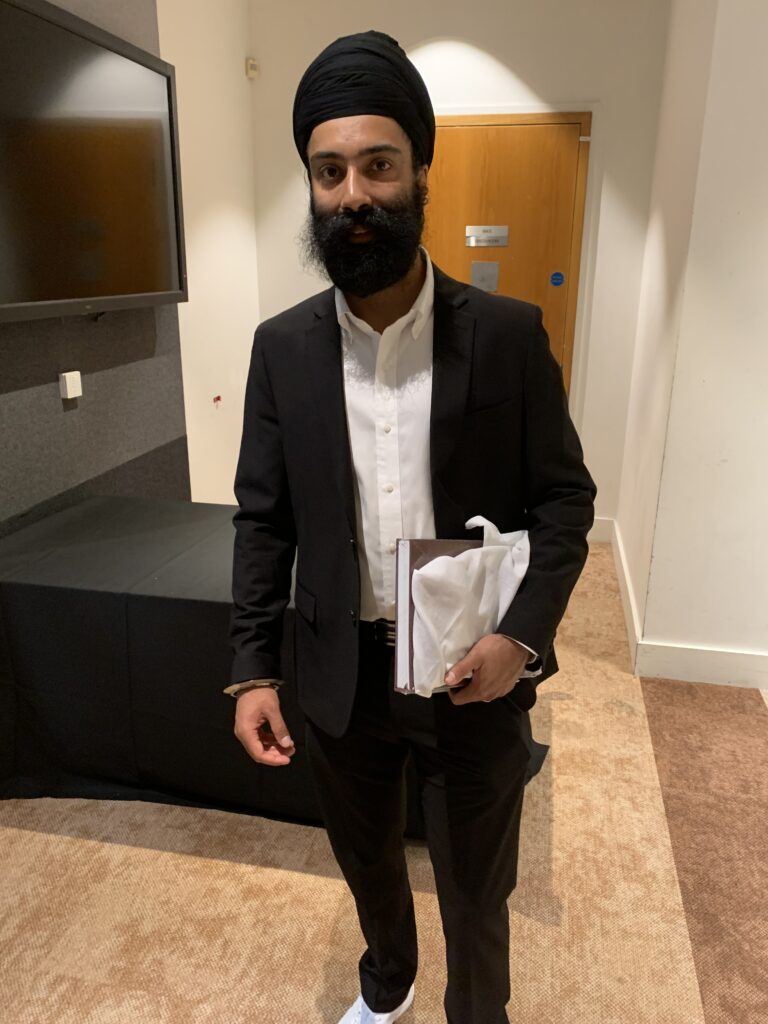
Ittvinder Singh added: “One of the things we wanted to do was make it a Q&A and make sure the voices that we were hearing were not our own.
“I’m not the greatest Chandi Di Vaar interpreter in the world I am part of a community and I would like to listen as much as maybe I’ve presented myself through the visuals, so yeah I think that was the key for me on this event was to have the Sangat (congregation) turn up, people turn up people who are experiencing this for the first time or well versed in it people who had the sane biases as I did when I first started out on the project but I think the biggest thing for me is to have the humility to listen.”
In response to these types of events for the younger generations, Dr Singh said he hopes they will “take a look into the past, read some of the poetry and look at some of the artwork with a new set of eyes form a perspective that is precolonial where you are not just primarily looking at some of these elements through the lens of identity’.’ This highlights the educational message that is key to this exhibition.
These ideas were mirrored when Ittvinder Singh answered said: “I am here to learn and listen just as much from the younger generation as I am from the older generation, furthering the significance of education.”
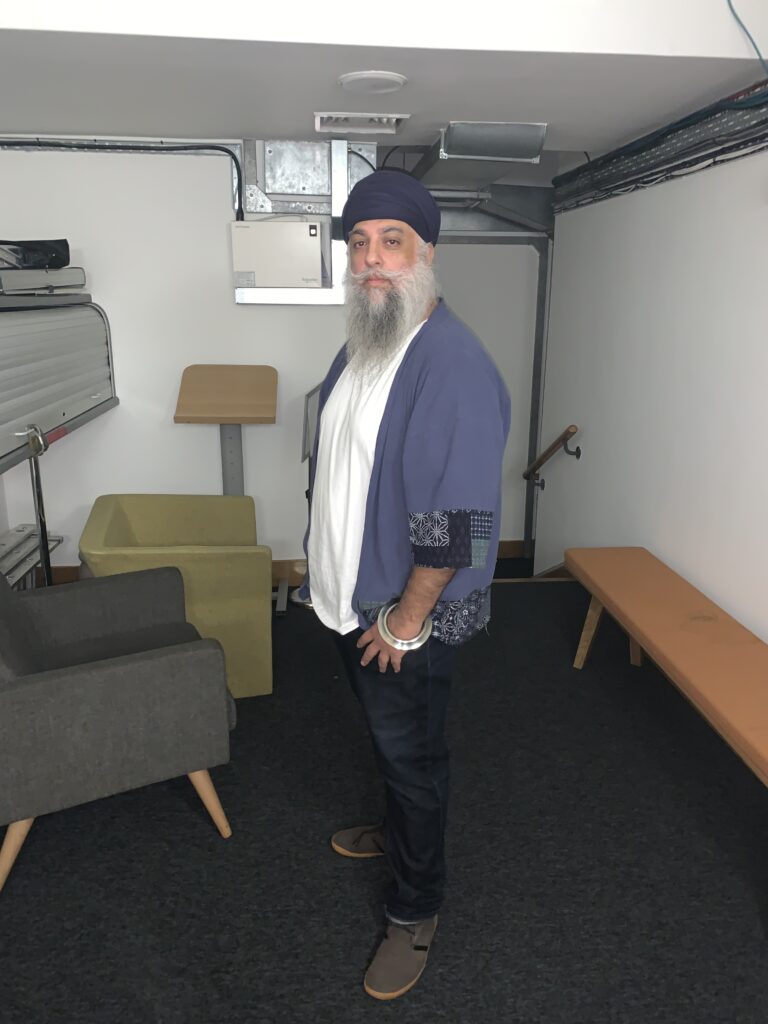
Listen to Dr Jvala Singh talking about what he hopes younger generations would take from an event like this:
Speaking separately on the role this event can play in preserving Sikh history and heritage, both said how they hope this type of event can inspire and lead to more events like this, where writers and artists can create more freely and openly.
The illustrator Ittvinder Singh said events like this can be ‘’visual Katha’’ (visual storytelling), further showing how art can be used in tandem with storytelling to communicate events to new audiences.
Ittvinder Singh on what role exhibitions like this can play in preserving Sikh history and heritage:
Though the answers behind the inspirations for this exhibition were answered perfectly by the organisers, the reactions to the event lie with the audience and those who had a firsthand experience in attending the Ballad of Chandi and how it explored Sikh history and heritage in front of a contemporary audience.
For some visitors, the decision to attend was shaped by the chance to hear a fresh perspective on historic texts. One attendee, Harpreet Singh, spoke about how this event has given a chance to see things from a different perspective and how it provokes thought and imagination, doubling down on the educational idea, saying that these exhibitions are hugely important for the youth and the whole community to open up to different perspectives.
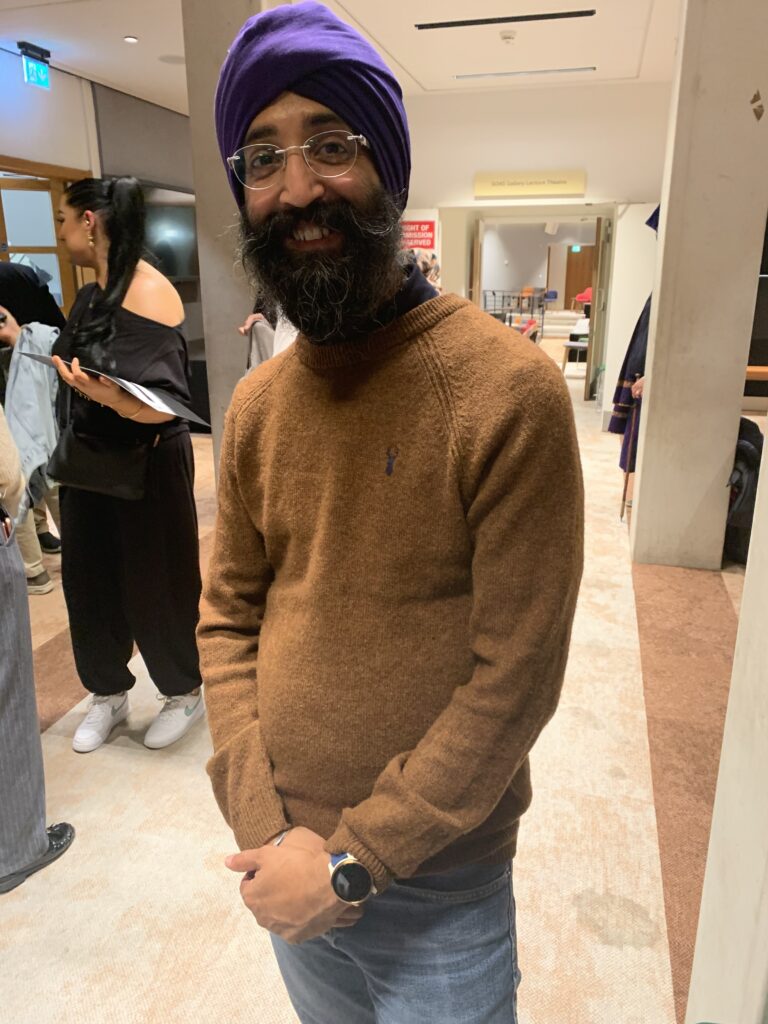
Harpreet Singh on how visiting the exhibit changed or deepened under understanding of Sikh heritage or Chandi Di Vaar\;
And why it is important to have exhibitions like this in the future:
The sentiment of perspectives was also mentioned of by visitor Beant Dhillon, who spoke about understanding Chandi as the “divine feminine” and how some concepts are “steeped in prejudice and preconceived notions of Gurbani (words of the Guru) and what Guru Gobind Singh is saying”. He also delved into the idea of Chandi Di Vaar in the modern age: the “idea of contemporary explorations of these Puratan (old) texts is just incredible it’s what we should be doing, engaging earnestly with Gurbani and our texts”. This furthers the notion of how and event can be used to share perspectives and educate people.

Beant Dhillon discusses a particular idea or theme that stood out to him:
Through the perspectives of Harpreet Singh and Beant Dhillon, it is clear to see how exhibits like the Ballad of Chandi can inspire audiences to revisit historical texts and perceive them from different perspectives whilst engaging with likeminded individuals at the same time.
Harpreet Singh spoke about education and opening up new perspectives, not only for younger generations but also for the wider community. Responses support the idea that cultural exhibitions like this offer more than just history, but open opportunities to converse and discuss Sikh heritage on a deeper level.
Ultimately, the Ballad of Chandi exhibition shows us how literature, storytelling and artwork can come together to present historical and cultural traditions to modern-day audiences. Through the perspectives of the creators and visitors, this project emphasises the growing value of Sikh heritage and its exploration whilst at the same time encouraging a newer generation to engage with historical text and give their perspectives and thoughts.
In a city forged by a variety of cultures and histories, exhibitions like this can offer a way for people to keep those traditions alive and open to further and deeper explorations.
Leave a Reply