
by Anastasiia Savina
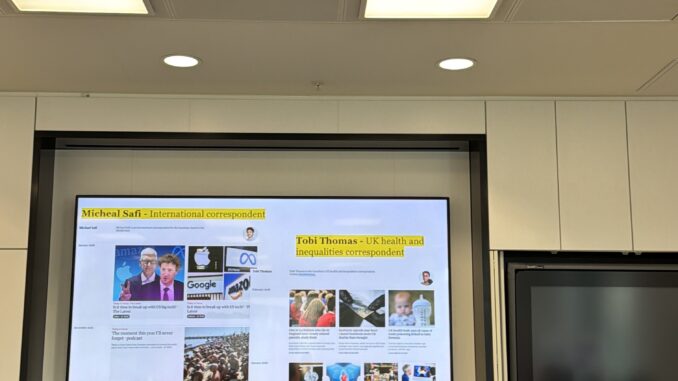
Correspondents Michael Safi and Toby Thomas. Image by Anastasiia Savina
Second-year Journalism students from London Metropolitan University visited The Guardian’s London headquarters as part of their professional development, where they explored how one of the world’s leading news organisations operates.
The session started off by introducing students to The Guardian’s history and editorial mission. Founded in 1821 by John Edward Taylor after the Peterloo Massacre, the newspaper was created to provide reporting that serves the public interest and challenges power. This principle was presented as central to the organisation’s identity and its long-standing commitment to independent journalism.
Students learned how that independence will be protected through the Scott Trust, a structure designed to ensure the publication cannot be controlled by shareholders or political pressure.
The model was explained as the reason The Guardian describes itself as “open to all, funded by many, and beholden to none”.
A day in the life of a Guardian journalist
The visit also outlined how the newsroom functions on a daily basis – from early morning newswire alerts and editorial conferences to reporting, editing and digital-first publishing. Journalists explained how audience data, including engagement metrics across the website, app and social media, informs editorial decisions while not replacing news judgement.
A Q&A session featured two Guardian journalists: international correspondent Michael Safi, who hosts the newspaper’s Today in Focus podcast, and UK Health and Inequities correspondent Tobi Thomas. They discussed reporting practices and career paths in journalism, and gave students top tips about how to enter the field.
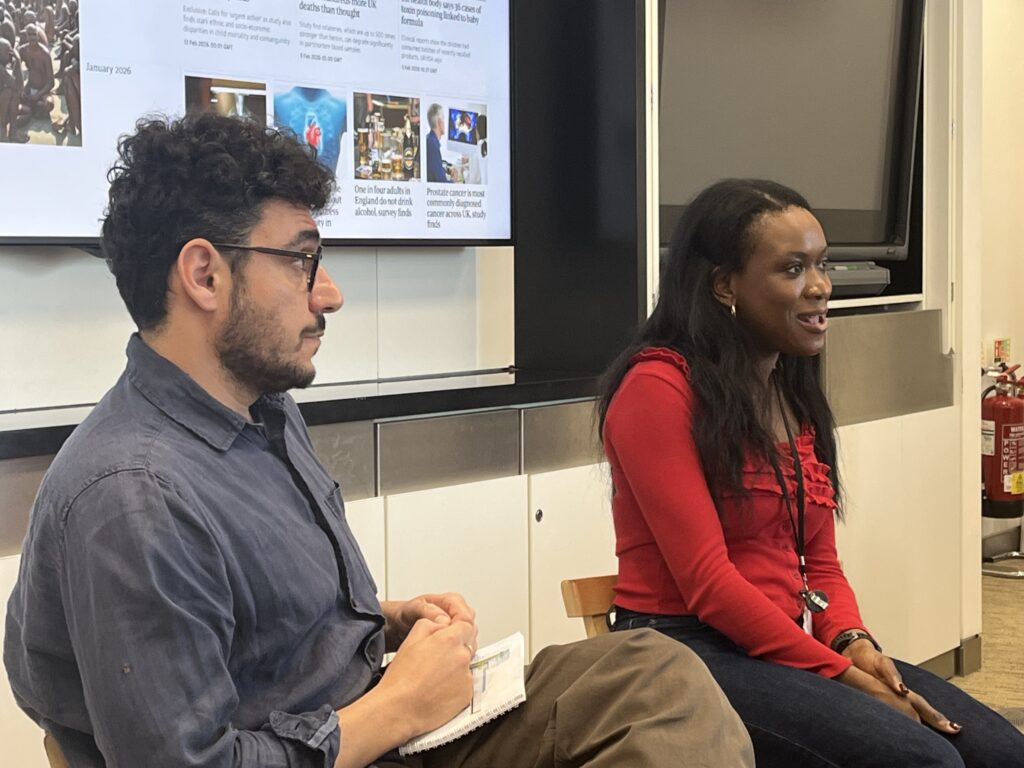
Speaking about interviewing vulnerable sources, Thomas stressed the importance of empathy, explaining that journalists must balance professional responsibility with sensitivity when covering difficult stories. He talked in particular about talking to people in the aftermath of the bombing of churches in the Middle East.
Safi highlighted the importance of building long-term relationships with sources, telling students that investing time and trust is essential because “your obligation is to readers and the truth,” even when stories are complex or uncomfortable. She also mentioned the importance of dealing sensitively with people who face life-changing circumstances, such as baby loss.
The discussion also addressed the role of artificial intelligence in modern newsrooms. Safi argued that while AI supports research and production, decisions about what stories matter and whose voices should be heard will remain a human responsibility.
The visit gave students practical insight into newsroom culture and the future of journalism, emphasising that curiosity, editorial judgement and trust will continue to define the profession in an increasingly digital media environment.

Students on the Guardian premises.
Leave a Reply