

An AI-generated image of a magazine front cover. Credit: FreePik
By Kim Tran
Fashion brands have joined the trend of featuring AI in their campaigns by using AI-generated models. Most notably the Spanish fashion retailer, Mango and American clothing company Levis have both featured AI models in their campaigns before.
AI is not a new idea to the fashion industry with companies like WGSN using the intelligence to predict future trends and human-like digital influencers. The idea of digital influencers has been on the rise for a while, where digital avatars are created by computer-generated imagery and AI tool; they are used to create a social media presence. They interact with the world and other users on social media, their popularity has prompted marketing agencies to consider them as a cost-effective option.
Lil Miquela, a fake avatar with millions of followers on Instagram, has partnered with luxury fashion houses like Prada and Dior. Miquela’s presence has established a space for virtual influencers in the world of culture and entertainment. This is seen in interviews with music artists such as J Balvin and the Calvin Klein campaign with Bella Hadid.
H&M recently just announced their initiative to use AI models but with the incorporation with real life models – they will be called “digital twins” and will work directly with the modeling agencies to make digital replicas of them. According to the company, the models will have full ownership of their virtual selves and can choose what brand they can work with, even with H&M’s rivals.
The question that it poses is whether or not this approach will have an impact on other workers such as photographers, stylists, hair and makeup artists.
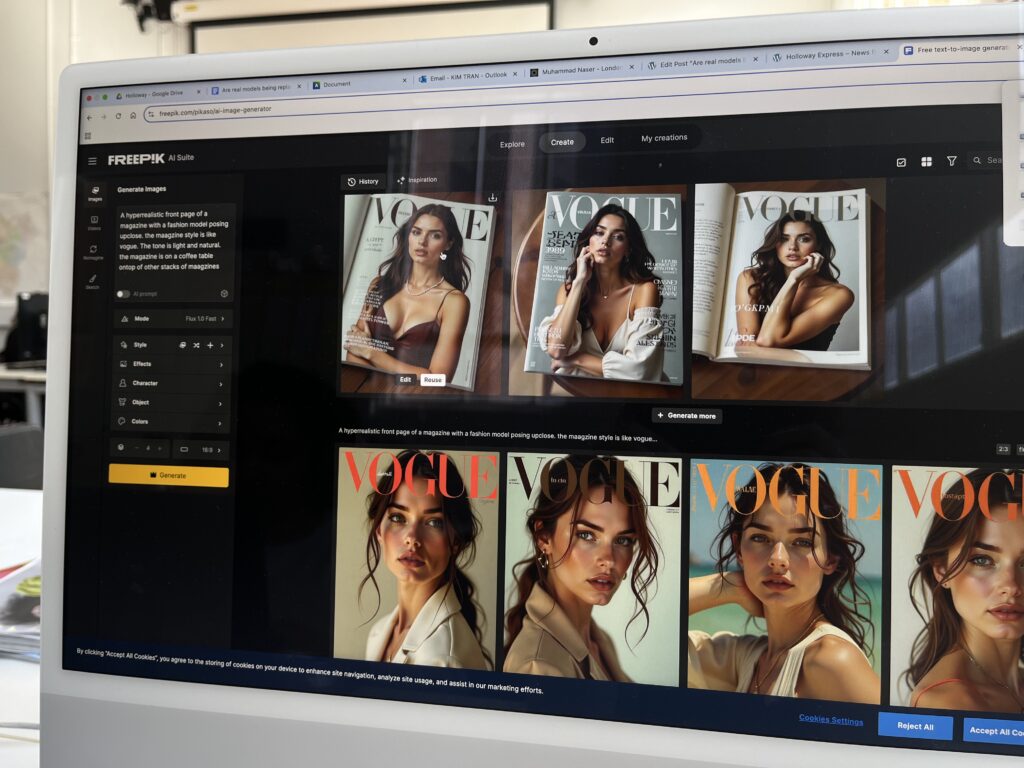
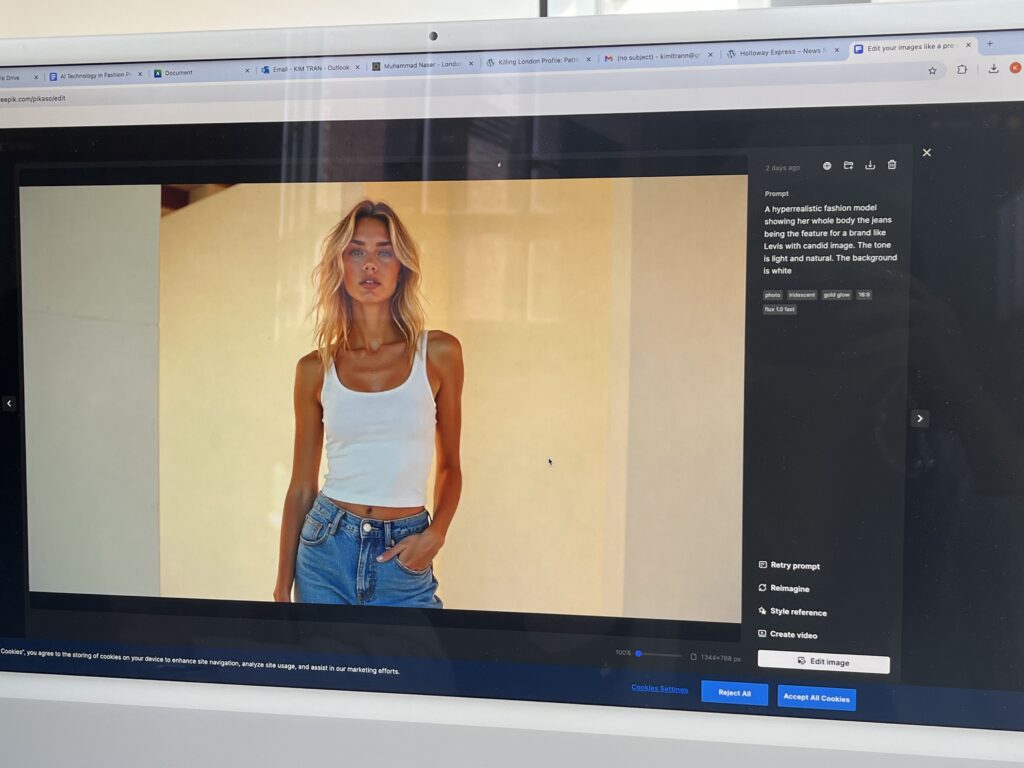

Prompts given to an AI generator to create a magazine front page and model. Credit: FreePik
Alexandra Andrei, 20, is a Birmingham City fashion branding and communication student who has explored the idea of AI-generated model and even created her own images to investigate if diversity can be promoted by it. She said: “I agree that if done right, yes AI models can showcase the beauty of diversity. However, they cannot fully replicate the beauty of real humans as AI models will always have that ‘lifelessness’ in them.
“I believe it helps promote diversity to a certain extent, this is because not all AI models break the stereotypes and actually sometimes even end up reinforcing them by generating tall, skinny models.”
Backlash to AI-generated campaigns
But not all reactions to the usage of AI models have been positive, with many criticizing the Calvin Klein advert of Bella Hadid and Miquela that was posted for Pride month. The collaboration showcased the famous model making out with the digital influencer as part of the brand’s #MYTRUTH campaign.
“CK’s ad borrows sexuality for clickbait, othering queerness as ‘surreal’ (and combining it with the added virtual human gimmick) as engagement-driving content,” wrote Emma Hope Allwood for Dazed.
Another argument against AI models is that it is a cheap way of selling diversity and not hiring models from those cultural backgrounds, as companies are saving money from not using and paying agencies for their work.
Notably, the denim brand Levi’s, have started using AI-generated models to increase diversity and already featured an advert with it. Michael Musandu is the founder of LaLaLand.ai, who created the AI modeling company and collaborated with Levi’s. He said “that LaLaLand.ai’s intentions is not to “replace” models, but allow brands to afford present different clothes on as many bodies as possibly”.
Julie Nguyen, 22, is a signed model to Named Model, and discussed her opinion of AI being used and the effectiveness. She said: “I can see it being useful for brands/photographers/people who hire models because they can get the exact type of model they envision for their projects. However, I worry about the impact it’ll have on human models and if we will get less work in an already competitive industry.
“I can see that being helpful for people who want to see how clothes will fit on their particular body. But, there may also be certain groups who don’t trust in the AI because it’s not a real person wearing the clothes,” she added.
Asked if AI could ever replace humans, she said: “I don’t think they can replace them because human models can have an impact on people through their human emotions and experiences that cannot be manmade on an AI model.”
Muhammed Abu Naser, a business lecturer at London Metropolitan University, said: “Rather than replacing human roles in sectors like fashion, healthcare, education, and supply chain, AI will serve as a complementary tool, enhancing existing workflows.”
The full implications of AI-generated models have yet to be seen but they are slowly being incorporated more in the industry, whether that is luxury fashion houses or high street brands.
Leave a Reply