

By Maria Luiza Montejano Pedrosa
A painful reality of what it was like to live under a dictatorship is revealed in Brazil’s first Best Picture nominated film I’m Still Here (2024), an award-winning film deserving of the ten-minute standing ovation it received during the Cannes Film Festival.

Following the film’s premiere at the BFI London Film Festival in October 2024, I’m Still Here has officially hit UK cinemas on February 21st with screenings in nationwide cinemas ahead of the Oscars.
It is the very first Brazilian film nominated in three categories: Best Actress, a category of which Fernanda Torres recently became the first Brazilian woman to win at the 2024 Golden Globes, Best International Feature Film and Best Picture, the most anticipated category of the night.
Based on Marcelo Rubens Paiva’s biographical book that became the title of the film, I’m Still Here tells the story of Eunice Paiva, a mother of five children forced to face the reality of the military dictatorship following the kidnap of her husband, Rubens Paiva, and the incessant search for justice in a repressing government in Brazil, 1971.
The renowned director, Walter Salles, decided to adapt Marcelo Rubens Paiva’s autobiography by having the cast truly embrace themselves into the lives of the family and unusually recording the film in chronological order, making the cast truly feel all the emotions for the first time as they did as well, without being Influenced by the script.
“There was this parallel between the character and the actress, it happened all over the film. It’s like we are not acting, but we are acting,” said Fernanda Torres in an interview to Sony Pictures Classics.
“As we did it chronologically, one day Selton (who plays Rubens Paiva) was taken, and I remember thinking ‘My god, I’ll miss him’,” she added.

Known for his outstanding work, Salles filmed the film in 35mm, which is rare in Brazil, which pictures the richer tones of Ipanema beautifully just as much as it shows the dull grey and black shades of the torture rooms in the army barracks.
It is undeniable to say that Torres’ and Mello’s highly talented performances meet with Salles’ meaningfully detailed directing to create a sensory experience for the audience that feels their pain, anguish and is left with a yearn for justice, hungry for more.
In every scene that the family lives their joyful daily routine living close to the beach the audience is reminded of the horrifying situation the country is suffering. This can be seen at the beginning as the family hosts gatherings with friends and watches the news mention the capture of the Swiss Ambassador, or when they go to the beach and prepare to take a picture but Eunice looks worriedly towards the military tanks in front of them, sensing how close this harsh reality really is.
As the film follows Eunice’s point of view, the audience is left to find out not just the truth of what happened to Rubens at the same time as her but what was this second life he had, as she discovers the letters he received and details of the life of resistance her husband had to protect their family and help others.
At the end, a pleasant surprise: Fernanda Montenegro, veteran Brazilian actress and Fernanda Torres’ mother, plays older Eunice at the last scenes of the film after a time skip. Certainly a special moment for both, “She’s 95 and still working like a furious lion. To live so long and to see this happening, and for a film that we are in together, is beautiful. I mean, it’s pure magic,” Torres proudly told the Los Angeles Times.
In some sort of coincidence or destiny, Brazil’s last Oscar nominee for Best Actress was Fernanda Montenegro in 1999 with Central Station, another critically acclaimed film directed by Walter Salles. She lost the statue to Gwyneth Paltrow for her role in Shakespeare in Love (1999). Now, 25 years later, mother and daughter are reunited to share the same role through Salles’ lenses.
As the credits are displayed the house were the family resided is shown but now empty of their presence, carrying only the memories of what was once a family that lingered to be finally reunited but left seeking proof of the crime that caused their demise.

The soundtrack, carefully architected by Affonso Gonçalves and Walter Salles, tells the story perfectly in the film, with real avant-garde Brazilian classics of the 70’s like Gal Costa, Erasmo Carlos, Tim Maia and Juca Chaves, who suffered the sharp claws of the military cultural censorship as they were prohibited to release any songs that went against the regime.
“That generation, they were in a moment in an incredible moment in Brazil: a brilliant time for music with Bossa Nova, Cinema Novo. Everything was brilliant, and then there was the coup,” says Fernanda Torres in a Q&A with Film Independent.
On a particular scene of the film Veroca, the oldest daughter played by Valentina Herszage, moves to London and mentions meeting Gilberto Gil, one of the members of the Tropicalia movement in Brazil who was exiled after being arrested and having his work censored.
In another scene where Veroca talks about the attacks the family suffered, Eunice muffles the discussion so her youngest children can’t hear it, by raising the volume of the radio that plays a song by Roberto Carlos, whose songs were known to be used to muffle scream from those being tortured in army facilities. The choice of featuring important artists to Brazilian culture, who were then at their peak, but also songs that are relevant to the storytelling is a known touch of Salles’ work, making the audience truly involve themselves on the screen and understand the scenes in every way possible.
Check this playlist made by Maria Pedrosa to immerse yourself in this lyrical experience of the film with 1970’s hits present in the soundtrack:
Why you should watch the film – SPOILER WARNING ⚠️
With award-winning performances and public acclamation, this is one of the most relevant films released in recent times.
“The film is incredible. It’s a deep and emotional movie that stays with you for hours after the screening. It’s sad, but at the same time, Eunice Paiva’s strength is a powerful and inspiring force,” said Vanessa Ribeiro, a 34-year-old Brazilian childminder and student living in London.
“It’s difficult to highlight just one moment, but Fernanda Torres’s performance as Eunice Paiva is outstanding. The emotion she conveys, even without words, is incredible. In the ice cream shop scene, when she takes her family there just after learning that her husband was killed, you can feel her pain through her eyes. It’s a sensory experience—you feel the pain with her, and it’s impossible to hold back tears. An incredible performance by Fernanda Torres.”
She adds that people should watch the film because it is beautifully made. “The cinematography, characterization, and acting are all exceptional. And, of course, Eunice Paiva’s story deserves to be known and honored worldwide.”
This is shared by as Lívia Barbosa, a 22-year-old student shares her excitement for Torres’ marvellous performance.
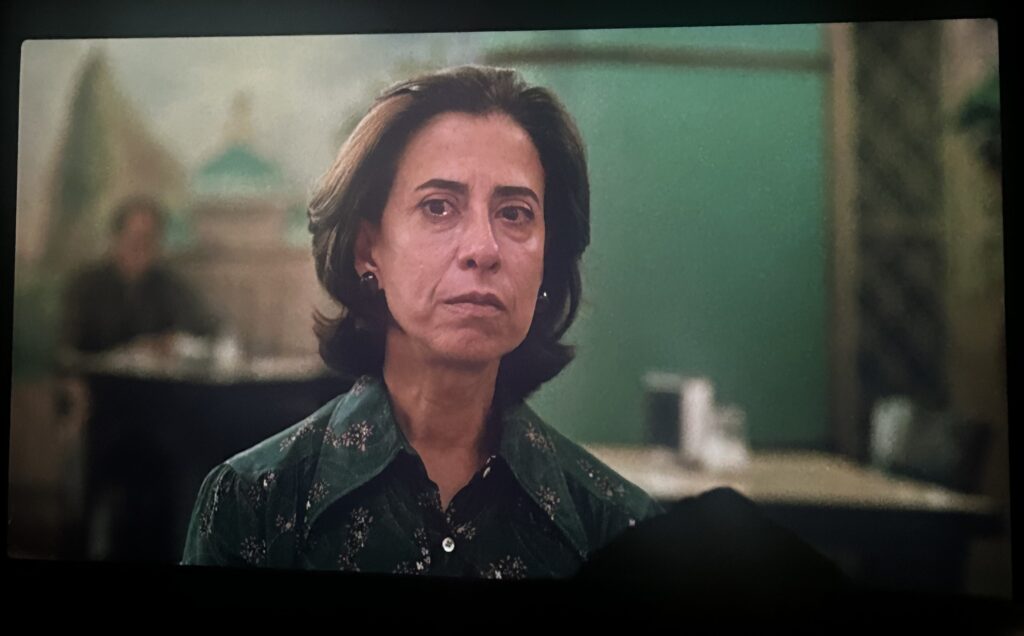
“The scene in the bathroom after Eunice is freed, when she showers and scrubs her skin hard as she wants to forget everything that she went through and she sees her daughter at the door and they cry together… in my opinion, it was the peak of Fernanda’s incredible performance in the film,” she said.
“I thought the film was was well produced and incredibly sensible, I was expecting scenes of explicit torture and violence or a lot of crying and exploring the ‘dramatization’ of the theme, but in reality we can feel totally involved and emotional following the ‘little’ but not less important issues in Eunice’s life, like when she goes to the bank to withdraw money and is prevented because she does not have Rubens’ death certificate.”
A scene that stands was when the family, now without Rubens, posed smiling for a newspaper photo – but then the photographer advises them not to. “They want to see us sad, we will smile,” Eunie says, as they shine their brightest smiles to the camera. This captured the essence of who Eunice was, she never allowed others to see her sad and always found grace through life’s hardest battles.

The global recognition of Brazilian films has been on a rise in the past decades, with the growing popularity in films that have become classics like Central Station (1999), City of God (2002), and now with I’m Still Here (2024).
This has allowed Brazilian culture and its traits to be recognized everywhere by what it truly is, “I ask all the people to watch I’m Still Here to get out of your social bubbles and learn a little bit of the history of Brazil. Even so, it is an invitation to know our cinema, to cheer for the film, and for Fernanda, the Oscars, and appreciate our culture.” says Stephanie de Paulo, a 25-year old graduate in Foreign Languages Applied and International Relations from the University of Brasilia.
The dictatorship
In 1964, Brazil suffered a military coup that led to a Cold War-like confrontation, with the right-wing military against the “Communists”, ordinary people who acted against the regime. The military purged Congress by creating institutional acts that could not be challenged by the Supreme Court, and naming Field Marshal Humberto de Alencar Castelo Branco as president in April of the same year.
This led to a massive spree of torturing citizens, many who were exiled to remain alive. Kidnaps and disappearances of more than 10,000 people occured, many of whom who had their remains disposed of in rivers and nature areas all over the country.
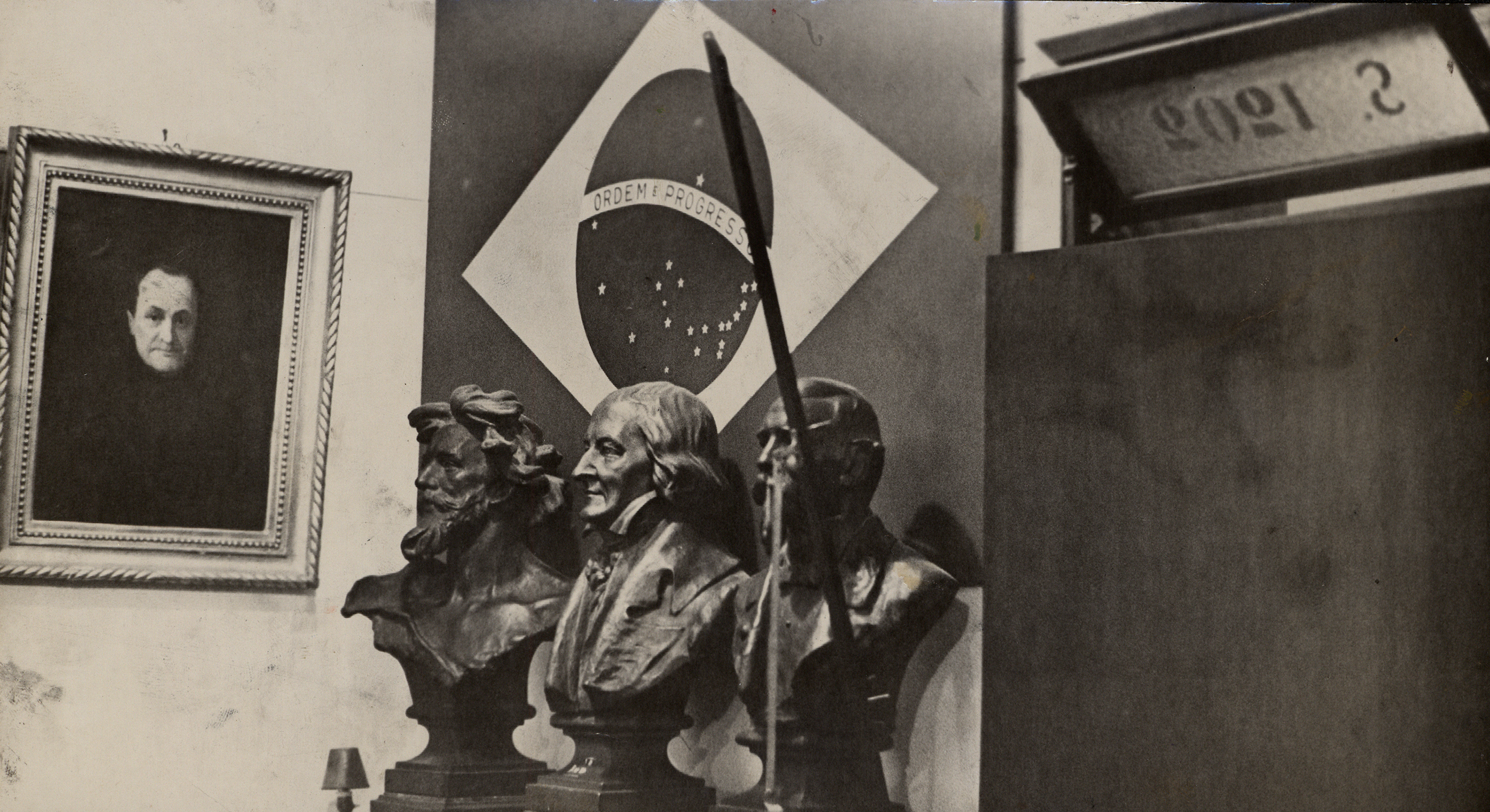
“From 1970 to 1974, Carlos Alberto Brilhante Ustra was the head of the DOI-CODI, the intelligence agency responsible for stamping out critics during military rule. He oversaw the torture of political dissidents while they were detained by the secret police,” Marcelo Rubens Paiva wrote in the NYTimes.
This period of horror would end in 1985, after many promises of peace by different presidents and mass devastation and censorship of cultural movements, influence of news, repression of freedom of speech and democracy.

Why we are still here
Recently, on a Carnaval celebration on the roads of Rio de Janeiro, an homage to the Paiva Family was made. Marcelo Rubens Paiva, Eunica and Rubens Paiva’s son and author of the book, suffered abuse from individuals in the audience who expressed their discontent with his presence while throwing objects, including a heavy backpack.
This, however, is not the first nor the last time the Paiva family has suffered insults from those who do not agree with their story. Former President Jair Bolsonaro poked fun at the family’s expense multiple times, and even spat at a statue of Rubens Paiva that was put in place as a tribute to his story.

“The dictatorship has ended, we just need to warn the police”
A manifestation of public resitance agaist police brutality in Brazil, taken by Felipe Braga from São Paulo / SP, Brasil, available at Wikimedia Commons
Feeling the pain of the dictatorship deep in his skin, Marcelo Rubens Paiva experienced firsthand what the regime did to his family, specially to his father who was taken from him when he was only seven years old.“From the dictatorship we learned the importance of democracy, tolerance and the rule of law. Brazilians should not be fooled, Mr. Bolsonaro is not the savior our country needs. I thought that the life of my father and the suffering of my family and of many others was an essential chapter to help Brazil reflect and evolve.” he wrote in the NYTimes in 2018 after the election of Jair Bolsonaro.
Marcelo has written many texts featuring his story and has published books Happy Old Year in 1982 and I’m Still Here in 2015.

“This film is important because it tells a true story. It portrays the military dictatorship in Brazil during the 1970s, a terrible period when people were abducted, kidnapped, tortured, and killed. Given the current political climate, it’s essential to share stories like this to ensure we learn from past mistakes and do not repeat them in the future,” Vanessa Ribeiro said.
This film is proudly received by all those who were ever affected by a repressive regime but also those who have an interest in learning the truth about this period of Brazilian history through the mouths of those who experienced it firsthand. A chance to see why Brazil is written with an ‘S’ there, a true depiction of the strength of a country that was left out of award seasons for too long but got its break through with a film that truly introduces you to Brasil.
“The global struggle against authoritarianism, the manipulation of truth, and the rise of extremist ideologies make I’m Still Here an urgent and necessary critique of past and present political realities,” says de Paulo. “In 2023, Brazil passed through an attempted coup d’état during the change of government with the ex-president Jair Messias Bolsonaro’s electoral loss; it shows the approach of the film is still relevant.”

In addition, Fernanda Torres explains that “The dictatorships of South America were not a banana republic matter. They were part of the macro politics of the time. That’s why I always repeat that she’s a victim of the Cold War; she’s not a victim of the dictatorship of a banana republic country. People treat the dictatorships in South America like something that happened on that faraway continent. But it’s all part of the same story,” she said in an interview with Vogue.
“In Brazil, The rise of far-right movements and the lingering influence of Bolsonarismo demonstrate how misinformation and historical revisionism are used to justify authoritarian tendencies—elements that the film subtly exposes,” de Paulo adds.
“Globally, the resurgence of far-right ideologies further reinforces the film’s relevance. In the United States, increasing polarization and attacks on democratic institutions, including attempts to undermine electoral processes, mirror historical patterns of democratic erosion. Meanwhile, in Europe, far-right parties continue to gain electoral victories and public influence, often using anti-immigration rhetoric to fuel nationalist sentiments.”


Book your tickets now and watch the film that changed Brazilian history, in cinemas everywhere in the UK.
This author gives it a well deserved 5-star rating.
This film is one of my favorites of all time, thank you for this article, it means a lot to Brazilian and Latin American culture!!!<3
This film is one of my favourites of all time, thank you SO MUCH for this article, it means a lot to Brazilian and Latin American culture!!!!<3