
By Tia Rawlings
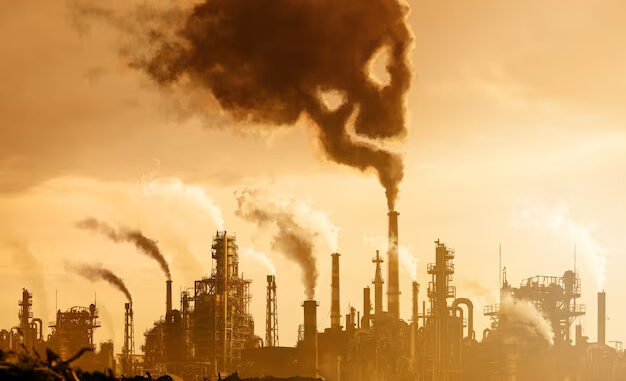
London is a city typically admired for its historic landmarks, sights and economic power – but looming beneath the wow factor is a silent enemy. Air pollution is not uncommonly related to big cities, but the severity is often underestimated.
Despite London Mayor Sadiq Khan’s efforts for ULEZ to save the day, the air quality in the capital is still undeniably poor.
“The level of air pollution in London exceeds current air quality guidelines,” Michael Bull, Air Quality Consultant at Michael Bull & Associates, which specialises in air quality and odour assessments, told Holloway Express.
While London has a number of vehicles typical for large cities, its dense infrastructure means that many are concentrated in one place, which means that the capital “tends to be one of the most polluted places in the UK”, according to the London Air Quality Network.
Transport for London says that vehicles are “the single biggest cause of London’s air pollution. They produce nearly half of all nitrogen oxides and emit tiny particles of rubber and metal – too small to see with the naked eye – into the air we breathe.” This causes diseases such as cancer and asthma and can also contribute to the rise of dementia.
“More than 500,000 Londoners live with asthma and are more vulnerable to the impact of toxic air – over half of these people live in outer London boroughs. Air pollution even contributes to the premature death of thousands of Londoners every year,” TfL says.
Monitoring the air
London Metropolitan University lecturer in Communications and Mathematics Dion Mariyanayagam is working to tackle all that.

Dion Mariyanayagam, Photo by Tia Rawlings
Previously, he led a project developing an Indoor Local Air Quality Monitoring System for Islington to allow the public to access information about the air quality in that area. Now he is working to build a new sensor to detect certain types of microplastics in the air we breathe.

Prototype of the Indoor Local Air Quality Monitoring System – Photo by: Tia Rawlings
“That’s what contributes to your lungs caving over time,” he says. “Bringing in dust is not too much of an issue, as we can cough it out. The problem is microplastics going into your system, those petro-chemicals releasing into your lungs and your food.”
Breathing in petro-chemicals might be a contributing factor to cancer and dementia, he adds. “One effect of dementia may be microplastics actually stopping blood, blocking capillaries and then causing part of the brain to die.
“So microplastics are a huge issue and we have no way to detect it.”
Plastic bottles are also contributing to health issues, he says. “Because if water in a plastic bottle heats up it becomes malleable and starts to break down, going into the water.
“Most plastics are what we call food-safe, so you can drink it, it’s not going to poison you, but my question is how food-safe is it, as there is always going to be a small bit of toxicity.”
“There’s no real winning, just prevention” says Mariyanayagam.
Leave a Reply