

by Lorena Cristea
The Metropolitan Police have found itself yet again under fire after a report condemned the institution of failing its citizens.
In her long-year review, Baroness Casey accused the Met Police of racism, homophobia, and misogyny after rape cases were dropped because freezers containing key evidence broke, according to the BBC.
The same study found that Black officers were 81 percent more likely to be in the misconduct system than their white colleagues.
“Messy structural chopping up of a big organisation won’t help the policing of London,” said the Met Police chief, Sir Mark Rowley.
In an interview for BBC, Sir Mark accepted the accusations that have been addressed on the institution’s behalf and said he is “deeply sorry” for Londoners.
Nevertheless, he refused to use the term ‘institutional’ and said that the service of Wayne Couzens and David Carrick cannot be disbanded overnight, but the unit “clearly needs a radical reform”.
Former Derbyshire police chief Kuy Mahal, who now works as a leadership consultant, agreed that ‘the restore cannot happen overnight, but said that in order to make big changes, the problem must first be recognised
‘We know that this issue has been going on for a long time, but this is precious time for a change in the police office,” he said. “Senior leaders hardly recognise that institutional racism, homophobia, and misogyny exists.”
Londoners share their experiences
Londoner Aaron Patel recalled one traumatizing event he experienced in May 2019, while he was taking the train toward Leicester Square.
The 25-year-old salesman said that he was pulled off the train and slammed against the wall by one officer, but the trooper left the scene after the incident.
“He pulled me back on the train, asked commuters where I got on and a man next to me said I had just got on and was minding my business.”
This was not the first time he was abused by one of the Met Police’s officers, he said. Over the years, he has been randomly approached by several cops because he is a member of a marginalised group.
“My dad, who is brown, has been pulled over countless times and had his car searched,” said Patel.
Police care about the colour of the skin, gender, and sexuality, people believe
Thirty-two-year-old Daniel, whose asked not to use his surname, agrees that there is plenty of discrimination within the police department. Moreover, he believes people are not being treated equally, and that their treatment may vary depending on the colour of the skin, gender and sexuality.
“Calling the police is often tedious and slow, especially with domestic issues. Interactions are more volatile, for example, after a night out,” he says.
According to Statista, in 2022, more than 48,000 Black people were stopped by the Metropolitan Police in London.
LGBTQIA+ community treated as second-class
Jeffrey Ingold is a 31-year-old PR director who is actively fighting for the rights of the LGBTQ+ community. He believes that the police forces are treating people who are part of this community as ‘second-class citizens’.
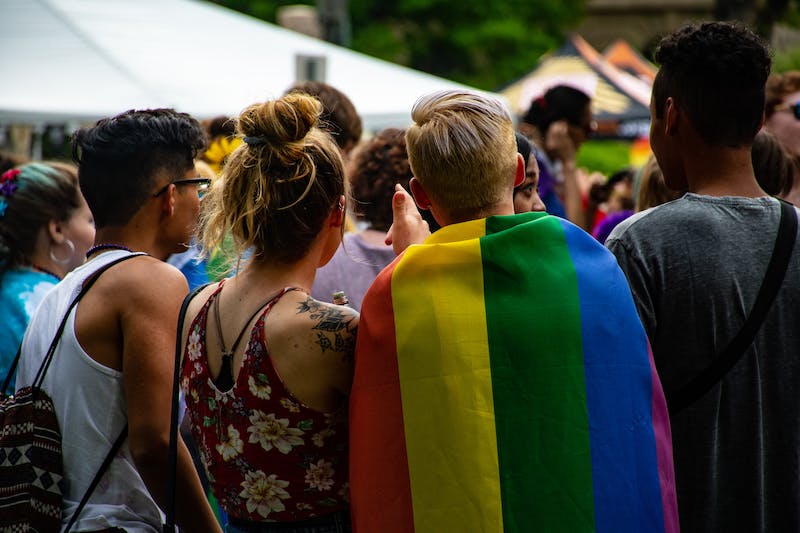
‘The results of the case of Stephen Port and the inquiry that came out last year shows that the Met Police don’t take crimes against LGBT people seriously,” he says.
Ingold describes the crimes against minorities as a ‘pattern’, as the police would often look at the possible victim and judge the situation based on their gender, race, and sexuality.
“You sort of have on one hand crimes against minorities that are not taken seriously, but also the police are increasingly targeting minority communities as perpetrators of crime,” he then continues. The full interview can be found below.
“The Met Police cannot restore trust until they are abolished,” Ingold said. He added that the trust of Londoners in the police forces has been severely disrupted after they failed to provide the safety that the citizens need.
“Minority communities, such as women, people of colour, and LGBTQ+ people feel increasingly unsafe. We don’t look to the police for safety anymore, we have to look for safety within our community,” he states.
Leave a Reply