
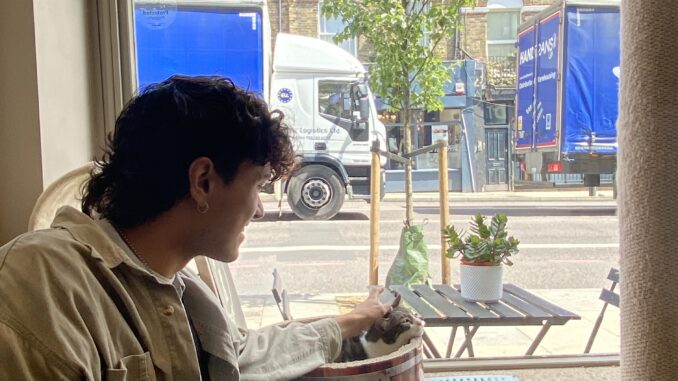
Cats, coffee and cakes – what more could one ask for?
By David Pasia
Located on Holloway Road, at No. 593, is Whiskers & Cream and, as the name suggests, it is the home to delicious coffee and the most adorable cats you’ll ever meet.
Kay Maria Allen, 59, is the director and owner of the establishment. Prior to opening Whiskers & Cream, Allen worked for the NHS as a psychiatric nurse, acting as the senior service manager for a large in-patient unit. After twenty-one years of service to the NHS, Allen decided it was time to step away.
While on a birthday trip to the Lake District, Allen visited a cat café as a treat from her friends. “That’s where the idea started – because I’ve always had the fantasy of opening my own café and making my own cakes. I love cats, I love coffee, cakes and that’s where the seed was sown.”
Whiskers & Cream first opened to the public in late 2018 with some soft openings. By 2019, the establishment opened its doors permanently. Now, the café operates every day of the week – aside from Wednesdays – opening at 10am and closing at 5pm, 5:30pm on Saturdays and Sundays.
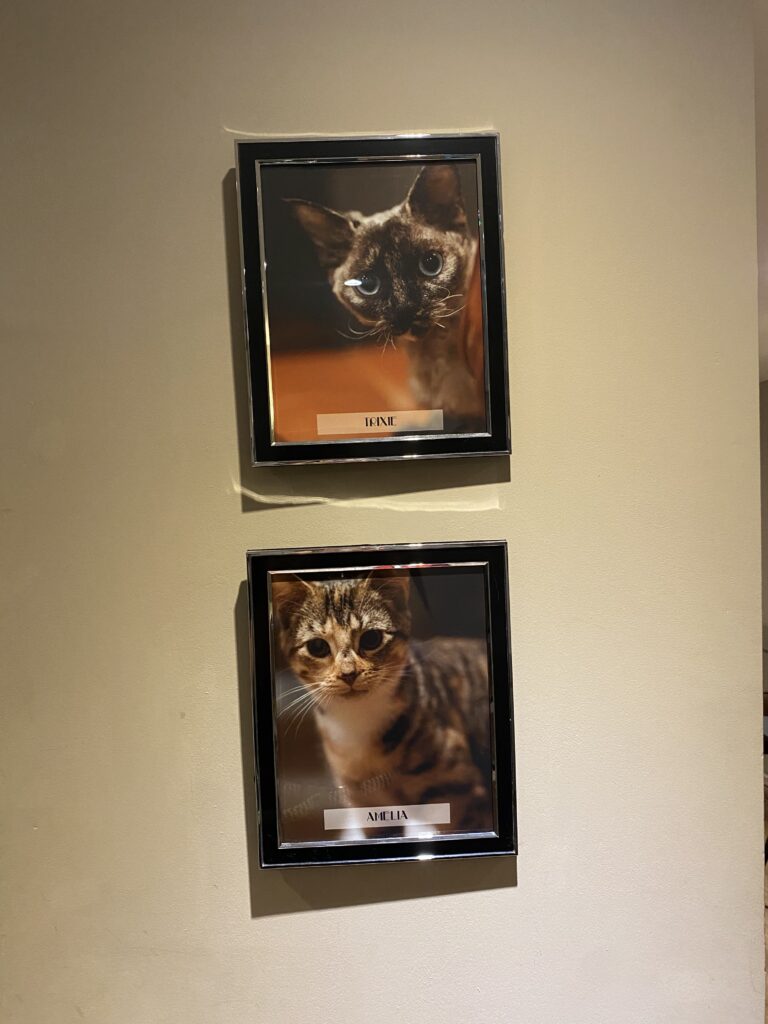
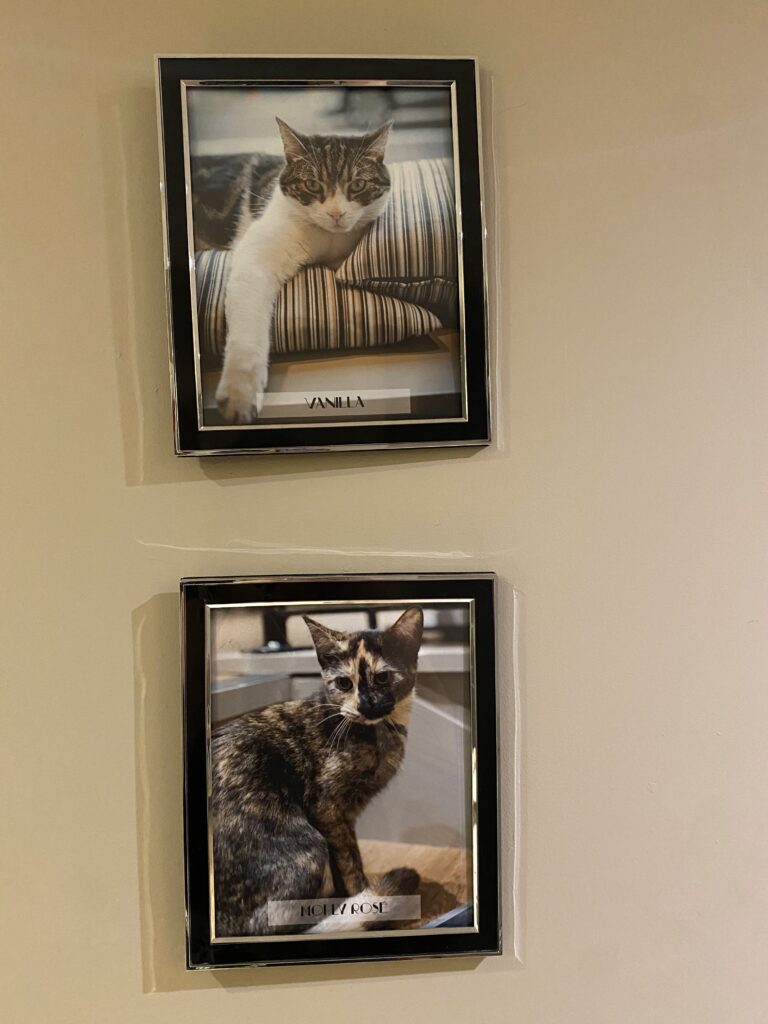
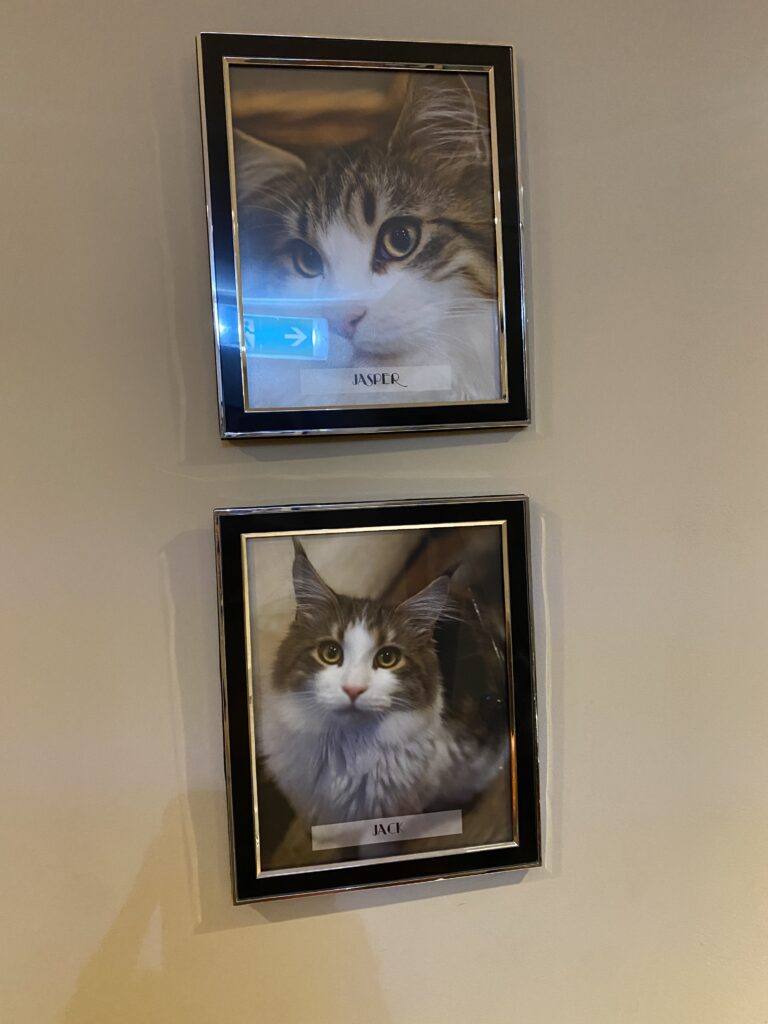
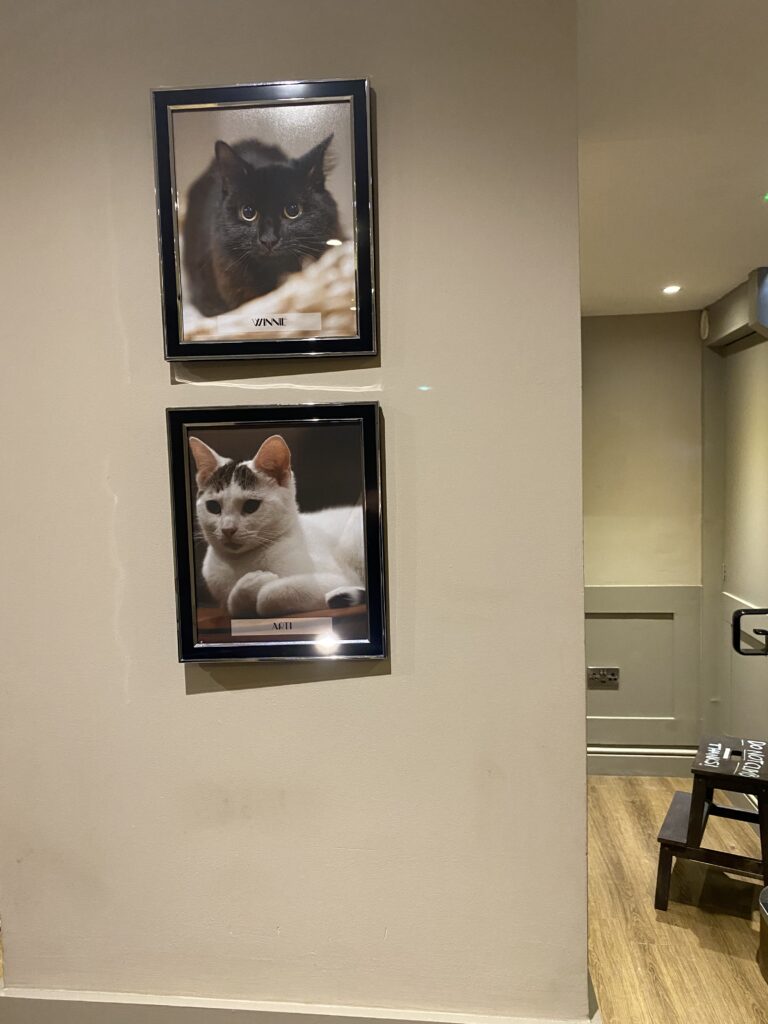
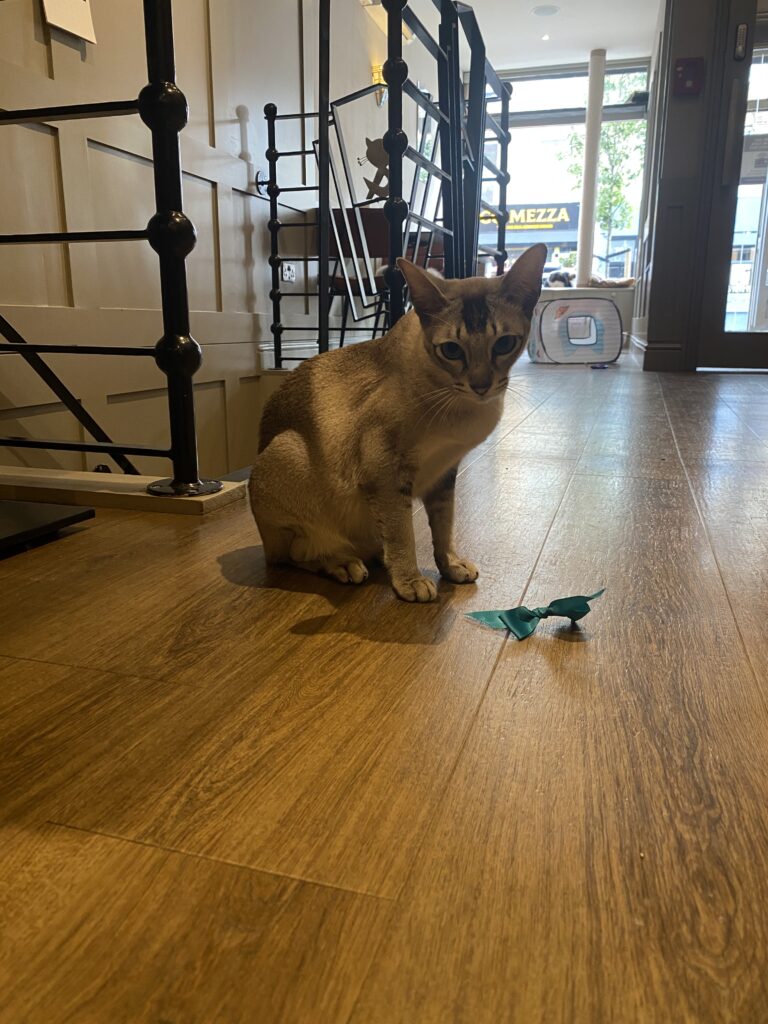
The café is home to nine resident felines – Jack, Jasper, Oscar, Vanilla, Archibold, Amelia, Trixie, Molly-Rose and Winnifred – all of whom with their own lovable characteristics.
Brief history of cat cafés
The world’s first ever cat café, named ‘Cat Flower Garden, opened in Taipei, Taiwan, in 1998 before becoming a global phenomenon.
In Japan, particularly, the concept was well received by the public, especially those who lived in small apartments that prohibited pets. Cat cafés exploded in popularity with seventy-nine establishments opening between the years of 2005 and 2010.
Europe, too, has been captivated by the prospect of enjoying cats and coffee simultaneously. In the UK, the first of its kind, Lady Dinah’s Cat Emporium, opened in 2014.
Allen also attributes the success of cat cafés to the difficulty of owning a pet due to dubious landlords or building restrictions. After all, to visit a cat café and play with the resident felines is to have a break from a sometimes stressful and overwhelming urban life.
Cats are great for mental health
For Allen, working with felines is like an extension of her background in psychiatric nursing, acknowledging the mental health benefits one may reap from interacting with their furry friends.
She says, “Cats are a great form of de-stressing. However rubbish your day feels, there’s always something that brightens your day with the cats. We have quite a few customers, that are regular customers, with mental health needs and it just fits in with my background profession. Very rewarding.”
A study conducted in Australia in 2015, published by Taylor & Francis, tried to identify the correlation between psychological health and pet ownership.
The study states, ‘Findings showed that the cat owners had significantly lower scores for general psychological health, indicating a lower level of psychiatric disturbance, and could be considered to have better psychological health than the non-pet subjects.’
Ami Okoruen, 23, a food runner living in London and cat enthusiast, also believes in the mental health benefits of visiting cat cafés. She says, “Being around animals can be a very relaxing experience, especially with cats as they tend to be calm. I have seen studies that show petting cats and feeling their purr can reduce stress levels. From my experience with cat cafés, I can say that this is likely to be true.”
Pet ownership is a lifelong commitment
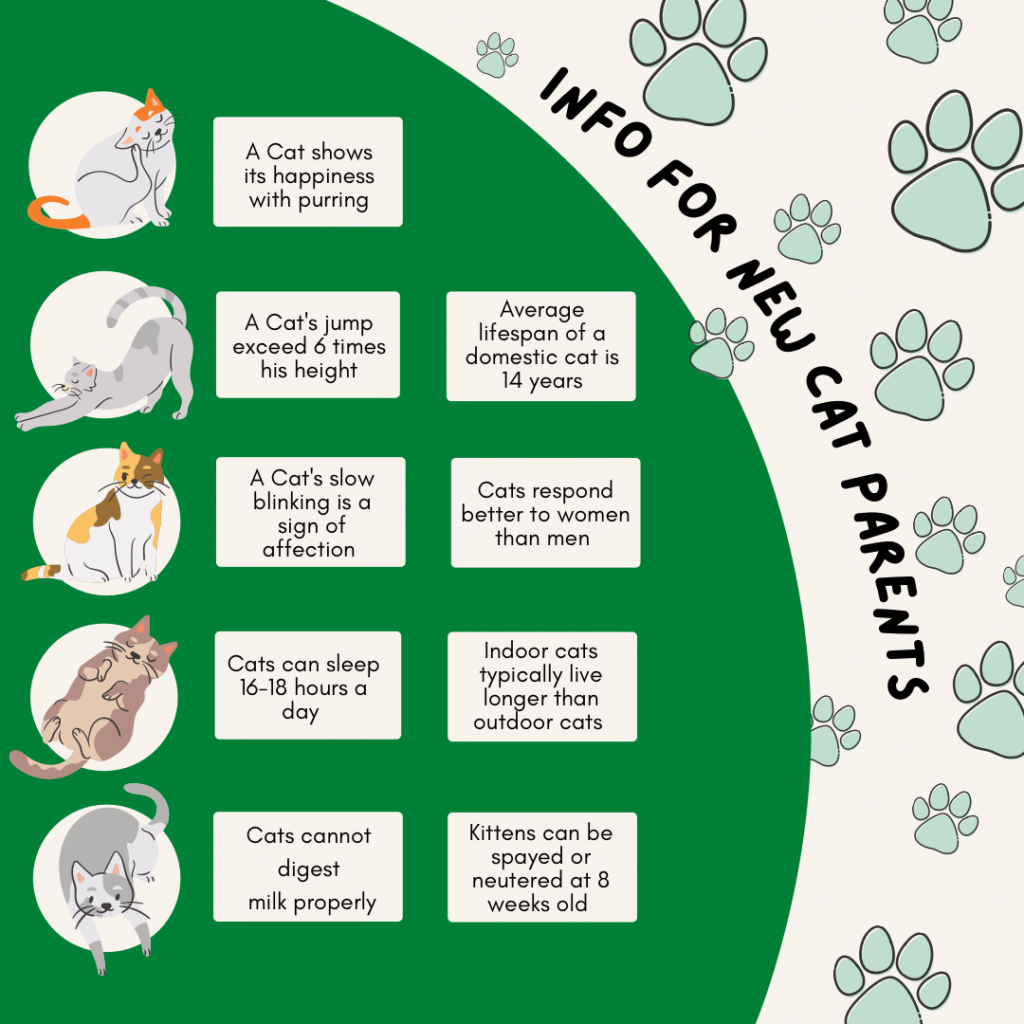
For those reading this article, who are considering owning a cat, visiting a cat café is like having a trial shift. Patronising a cat café is a great way to gauge whether or not you are ready to be a cat parent without the financial commitment to vet and food expenditures.
Being a cat parent, or any pet for that matter, is a huge commitment financially and emotionally. Pets should be considered an extension of family and ownership should only be considered if one is completely ready.
Over the pandemic, pet acquisition rose drastically as people clamoured to fill their lockdown days with caring for a feline friend, canine companion or other.
The Pet Food Manufacturers’ Association (PFMA) recorded 2.1 million people having collected a new pet during lockdown in their COVID-19 Pet Survey.
However, there is a darker side attached to this statistic. Among those who adopted or bought a new pet over lockdown, are some who made a rash decision and have decided pet ownership is not for them – for various reasons – resulting in their pet being abandoned or re-homed.
“Sometimes people do things on impulse; they don’t think them through. People don’t think about the added costs [of owning a pet] so that’s probably what’s happened. I don’t know how you can just return a cat who has made a relationship with you,” says Allen.
Okoruen also thinks prospective pet owners should do more research before diving into adoption, especially with everything returning to normal and everyone returning to work.
“Realising the amount of work that goes into keeping a happy and healthy pet, along with life returning to its busy schedule after COVID-19, left a lot of people regretting their decision to adopt a pet – or just not having the time to properly take care of the pet,” says Okoruen.
“I can understand why people who got pets ended up not keeping them, and I think they shouldn’t be judged for the decision.”
Pay a visit to a cat café
Whether you are a prospective cat owner or just love the attention from furry felines, why not pay a visit to a cat café like Whiskers & Cream? A day couldn’t be better spent drinking coffee, a book in hand and a content, purring companion on your lap.
As Okoruen, quite rightly, states: “I like that cats aren’t as needy as dogs; it means that when they do show you affection, it feels ten times as cute!”
Leave a Reply