by Gianluca Barbazza
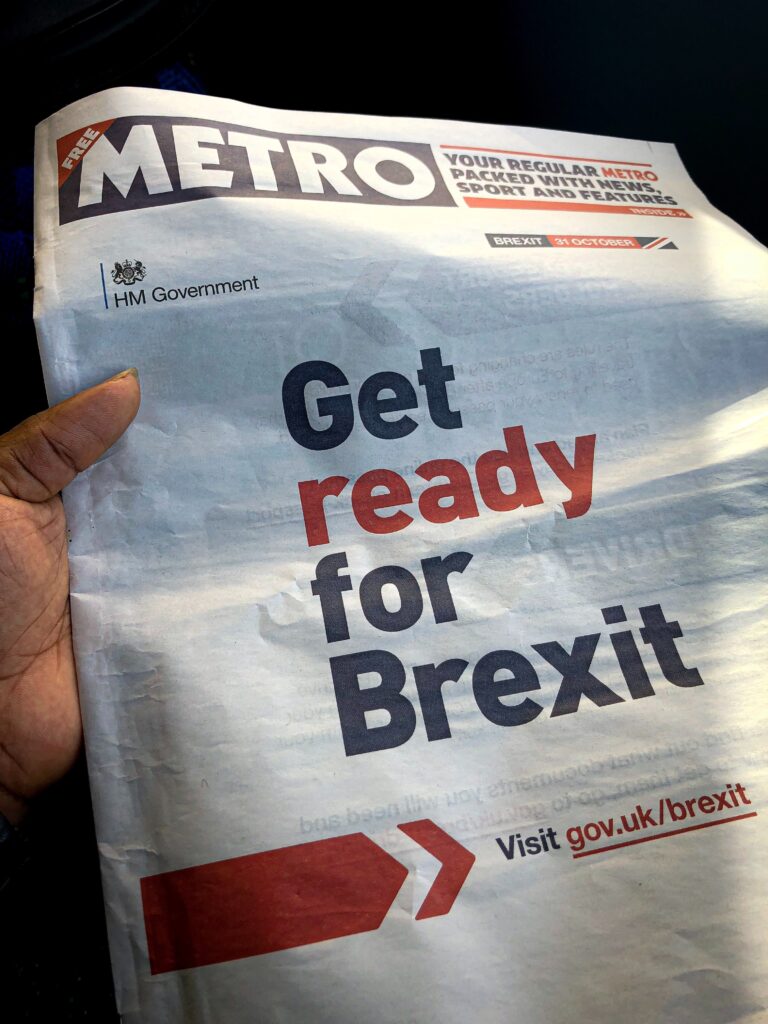
The UK has been struggling for nearly four years to find a good deal with the EU, when finally, on the 24th of December, on his social platforms, Boris Johnson said that the deal was done.
“By signing this deal, we fulfil the sovereign wish of the British people to live under their own laws, made in their won elected Parliament,” said the Prime Minister on an Instagram post six days after the confirmation of the Brexit deal.
But in the meantime, the very low clarity of this deal means some hapless truck drivers were stopped and deprived of their own food (a ham and cheese sandwich), only because EU rules ban milk, diary products and meat from being brought in from outside UK’s borders for “personal consumption”.
Nonetheless, in Northern Ireland, supermarkets have recently experienced a second wave of crazy shoppers leaving empty shelves, with the NI Secretary and the Government blaming it all on Covid, once again.
“We need common sense, particularly from the EU,” said NI Agriculture Minister Edwin Poots in an interview with The Irish News recently.
Poots added that a food shortage in schools and hospitals could be happening in the nearest future, possibly by April, if the trade barrier created between the North and Britain by the Brexit Withdrawal Agreement’s Northern Ireland Protocol doesn’t change.
“Food is a human right and must be treated as such,” said Giuseppe Barresi, 27, Tesco delivery driver.
Photo by Simone Hutsch on Unsplash
Barresi said that even in the remote scenario of a national food shortage, the Government should be working in order to make sure that everyone could have an easy access to food and support, if needed.
At London Metropolitan University’s Hungry London debate, Barresi’s comments were widely echoed. “It comes right down to food not being a privilege but a right,” Morven Oliver-Larkin of the London Food Poverty Campaign told students at the debate.
One way this could be achieved is to get the right people to make the right decisions. “We need to see greater representation. People like ourselves should be politicians. We see the needs of real people very day,” health care worker and mum-of-three Tiffanie Cummings told the event.
Leave a Reply