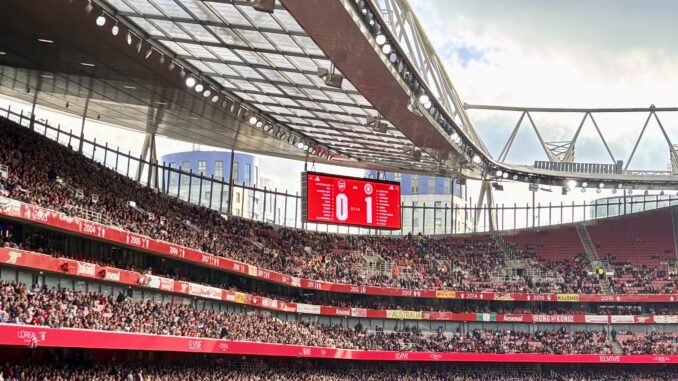
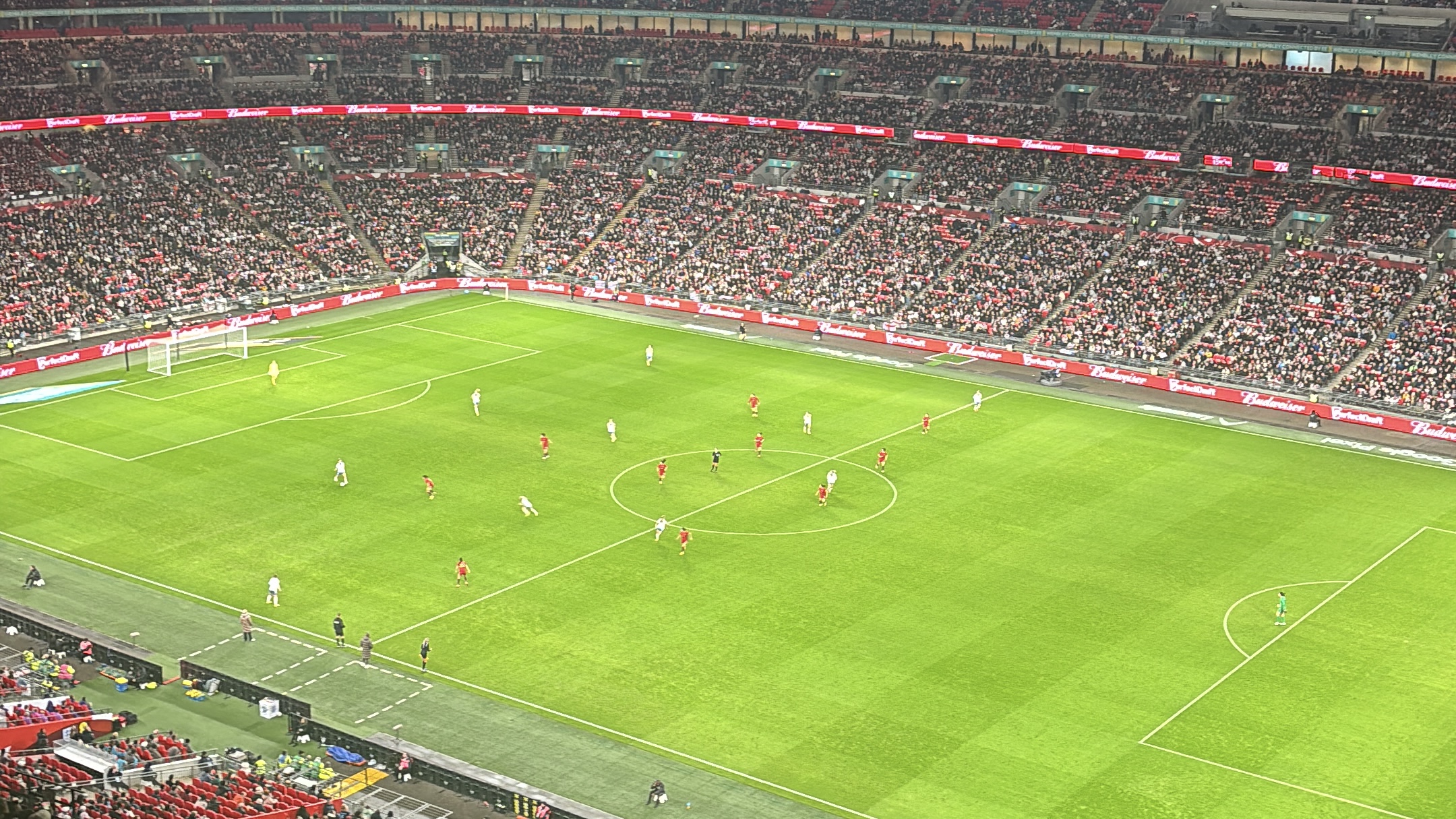
Floodlights hum above the pitch and the air inside the stadium feels charged and hopeful. It is matchday at an Arsenal Women home game and the stands are already filled with a sea of red. Scarves are draped over winter coats and young girls, families and supporters are settling in for a final against Corinthians.
Sitting here, it is obvious that this is not the demographic English football stadiums were originally designed for. Families often outnumber groups of middle-aged men. There are grandparents, friendship groups, youth teams and first-time fans. The atmosphere is vibrant but notably different from the traditional men’s matchday and the infrastructure of the stadium often struggles to keep up with the pace of the supporters needs.
The timing of this planning feels significant. As the crowds of supporters grow for the Women’s game, the gap between football’s past assumptions and its present reality is more and more visible in real time.
For years now the league has acknowledged, the stadium model “was built and designed for the male player and fan.” That historic imbalance shapes everything from bathroom allocation, changing room facilities and even the media zones. But at most WSL games the demand for male-focused facilities and infrastructure are much less.
Hannah Buckley, Head of Safety, Sustainability and Infrastructure at WSL Football, calls female-specific stadium design “a blind spot in the industry.” The document forms part of a broader ten-year strategy that aims to “unlock main stadiums…enhance current assets,” and support the development of new venues built with intention rather than just adaptation.
Back in the stands, the relevance of Buckley’s words are hard to miss. The halftime rush begins early. The line for snacks and drinks begin and the queue for the women’s toilets grows again, while the men’s facilities remain comparatively quiet.
The new guidance plans to directly address this imbalance, challenging the traditional ‘80%/20% male/female’ bathroom ratio and proposes a ‘45%/45%’ split, with an additional 10% allocated as gender-neutral option too. It is a small adjustment but for supporters it is quite a profound shift. “It’s great that Arsenal are having gender-neutral options, and long overdue,” said Dr Wendy Sloane, Deputy Dean of London Metropolitan University’s School of Computing and Digital Media.
Last year, Dr Sloane worked on an inclusion project with the Arsenal gaygooners, highlighting the lived experiences of 20 diverse LGBTQ+ fans – all members of the “UK’s first, and the world’s biggest, LGBTQ+ football fan club”.
“This is definitely a step in the right direction, but there is still a long way to go to ensure that all fans – and players – feel included and that they have as much of a right to belong as anyone else.”
“The rapid growth of the women’s game in recent years has merely highlighted the need to have those spaces designed with the needs of female athletes and fans at the heart of it”
Hannah Buckley
The guidelines extend beyond just the supporter facilities. They consider player welfare too, recommending changing rooms that are appropriately sized for women’s squads, lighting and mirror adjustments, period care considerations and they also highlight the importance of separate spaces for under-18 players. These are not minor changes; they allow for the professional needs of women’s teams to be met like never before.
It’s no secret that many more children head to women’s football games compared to the men’s. With these new plans, there is a strong emphasis on family experience. The new framework calls for integrated baby-changing facilities, family toilets and dedicated areas where supporters, media staff or players can breastfeed or care for their children. This just highlights that inclusivity is as much about comfort as it is about access.
Photo by Elspeth Chapman
Accessibility features prominently as well. The plans address changing place provision, sensory rooms, audio descriptive commentary and thoughtful seat sizing and spacing. It also calls for safe, well-lit travel routes ensuring that supporters feel secure arriving at and leaving matches. As the final whistle approaches in North London, thousands prepare to exit the stadium and into the night. The commitment to make supporters feel safe and at ease is increasingly important.
The message is clear throughout the new provisions, these guidelines are not merely reactive but forward-looking, positioning women’s football and its demands at the pinnacle of WSL stadium design.
WSL Football hopes this document becomes “a catalyst for change moving forwards.” Their ambition is to ensure the infrastructure matches the momentum. Sitting here, surrounded by families, young fans and lifelong supporters, that ambition feels both urgent and entirely justified.
The women’s game is no longer borrowing space and pitches. It is defining them.

Leave a Reply