
How London Met students are experiencing and shaping a neighbourhood in transition
By Davyd Zakharniev and Anastasia Savina
From Passing Through to Living Here
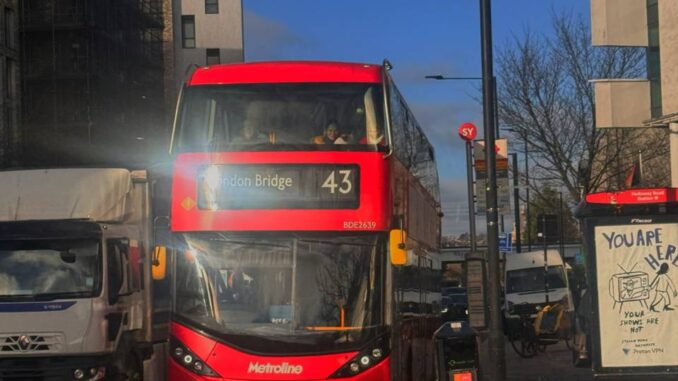
Once known mainly as the place you passed through on the 43 bus, Holloway is no longer just a corridor between King’s Cross and Archway. On a bright afternoon, walking from campus toward the newly refreshed Holloway Road, it’s easy to see how this ordinary stretch of London has quietly slipped into the global conversation about the “15-minute city”: the model, popularised by Paris-based planner Carlos Moreno, that imagines daily essentials within a short walk or cycle.
What began as a European experiment is emerging here almost unintentionally. Holloway is being reshaped by the same pressures dominating UK urban policy rising rents, air-quality targets, changing high streets and by the everyday movements of thousands of London Met students. Taken together, they’ve turned the area into a kind of living laboratory for what a more walkable urban future might look like.
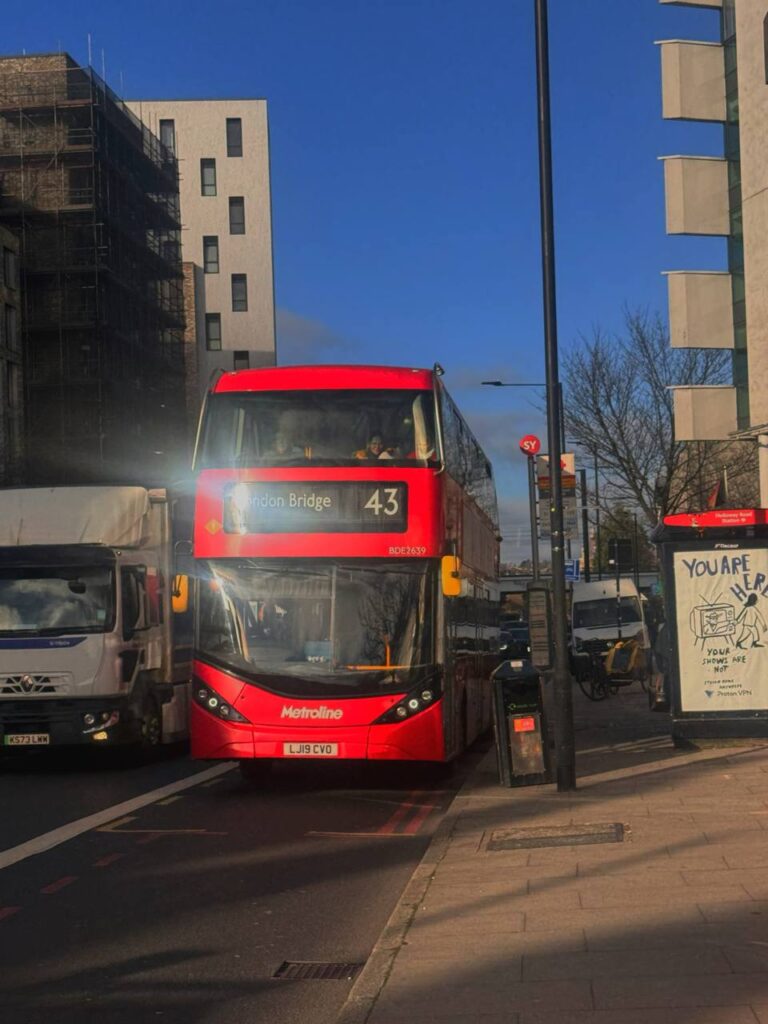
Photo by Anastasiia Savina
A Neighbourhood Quietly Redesigned
Around Holloway Road station, the changes aren’t dramatic but they’re cumulative. Pavements broaden in places where crowds used to bottleneck. Pedestrian crossings feel safer. A cycling corridor now links Camden to Highbury Corner with only a few breaks.
Much of this comes from Islington Council’s People-Friendly Streets programme, launched in 2020 as part of the post-pandemic shift toward active travel.
“I actually choose to cycle now,” says Rhea, a second-year sociology student commuting from Finsbury Park who did not provide her surname.
“Before, it felt like taking your life in your hands. Now it’s not perfect, but it’s doable.”
The High Street is shifting too. Long-standing grocers and repair shops now sit alongside zero-waste stores, independent cafés and new bakeries stretching toward Archway and Tufnell Park. Researchers at Centre for London note that neighbourhoods with strong student footfall often recover more quickly after economic shocks, a pattern Holloway seems to mirror. But change isn’t evenly felt.
“Some of these new shops feel like they’re not for us,” says Malik, who has lived off Seven Sisters Road for more than two decades. “Once rents rise, long-time traders disappear.”
Planning Pressures and the Price of Convenience
The arrival of the 15-minute model in the UK coincides with a complicated policy landscape. Councils face overlapping pressures: cutting car dependency, meeting Clean Air Strategy obligations, and addressing a severe shortage of genuinely affordable homes. Student housing captures this tension perfectly. Around Caledonian Road and Archway, private studio blocks promise “everything downstairs” yet many charge upwards of £300 a week.
Meanwhile, official figures for Islington show average monthly private rent at £2,708 in October 2025, up from £2,606 a year earlier. That’s a 3.9% rise in a borough already among the UK’s most expensive. “Proximity shouldn’t come at a premium,” an Islington planning officer told us at a recent consultation. “A 15-minute neighbourhood can’t be just for the well-off.”
Transport, at least, shows improvement. TfL’s updates to routes like the 43 and 271 have made buses more reliable, and the return of the Night Tube on the Northern Line has restored late-night mobility for students.
But low-traffic neighbourhoods in Highbury and Canonbury continue to divide opinion: quieter streets for some, increased boundary-road congestion for others. “You can literally see decisions ripple through the streets,” says one architecture student. “It’s like watching a planning experiment in real time.”
Green Space: The Quiet Glue of Local Life
Access to green space sits at the heart of the 15-minute model essential for physical and mental health, as stressed by the World Health Organization.
In Holloway, the improvements may be modest, but they’re intentional: renewed planting beds at Whittington Park, a calmer plaza near the Sobell Centre, and even Camden’s “micro-forest” pilots just north of Talacre Gardens.
“Having a bench where you can hear birds instead of traffic that matters,” says Fabio, a first-year architecture student, sketchbook open on his lap. But as UCL urban researchers warn, these upgrades risk triggering “green gentrification” improvements that inadvertently accelerate rent rises and displacement. The long-awaited redevelopment of the Holloway Prison site, marketed in the language of regeneration while promising social housing, sits at the centre of this concern.
Picture by Anastasiia Savina
Safety, Equity and the Lived Reality
For many residents and students, the walkable city is still a work in progress. Poorly lit pedestrian routes between Archway and Tufnell Park remain a concern; tenants on estates near Hornsey Road say public-realm improvements feel inconsistent and unevenly distributed. The cost-of-living crisis reinforces these divides.
With food and energy prices having risen sharply since 2022, “local living” can feel less like an eco-conscious choice and more like a financial constraint.
“A 15-minute lifestyle sounds great until you’re choosing between groceries and topping up your Oyster,” one student told a union forum. This pressure reflects a wider problem: rents in London remain high while incomes stagnate. Recent surveys show tenants in the capital now spend an average of 41.6% of their income on rent a burden that leaves little room for lifestyle design. For many students, that burden translates into a sense of trade-offs.
“You adapt, because you have to,” says Maya, a first-year media student. “But it’s weird when places get nicer around you, and you’re not sure you’ll still be able to afford to live here to enjoy it.”
A Campus Shaping the Experiment
The transformation of Holloway is not just something students observe it’s something they document, question and learn within. London Met, embedded directly in the neighbourhood, effectively uses Holloway as a live classroom. Through reporting modules and fieldwork, students interview shopkeepers affected by LTNs, map cycling routes, chronicle rent increases, and report on community meetings. The result is a feedback loop where classroom learning and street-level realities reinforce one another.
This approach is encouraged by journalism lecturer and former foreign correspondent Dr Wendy Sloane, whose teaching emphasises field reporting, equity and critical engagement. Students’ stories published through Holloway Express and other student platforms help surface local voices often left out of planning conversations.
Looking Ahead: A London Prototype in the Making
Whether Holloway becomes a model to follow or a warning to others depends on the choices being made right now: building genuinely affordable homes in the prison redevelopment, protecting long-standing traders rather than simply attracting trendier replacements, expanding safe cycling links, and designing public spaces that work for everyone not just newcomers or passing students.
The 15-minute city isn’t a magic solution and despite online conspiracies, it’s certainly not a restriction on movement. It’s a framework for rethinking access, sustainability and community life at a human, walkable scale. Messy, diverse, opinionated and always in motion, Holloway may be one of the few London neighbourhoods capable of showing what an inclusive version of that future could look like.
If the next wave of development listens to the people who already live and study here not just planners and investors it might just succeed. And if it doesn’t, then this “urban lab” will still teach us something: that proximity alone doesn’t make a community, but people do.
Leave a Reply