
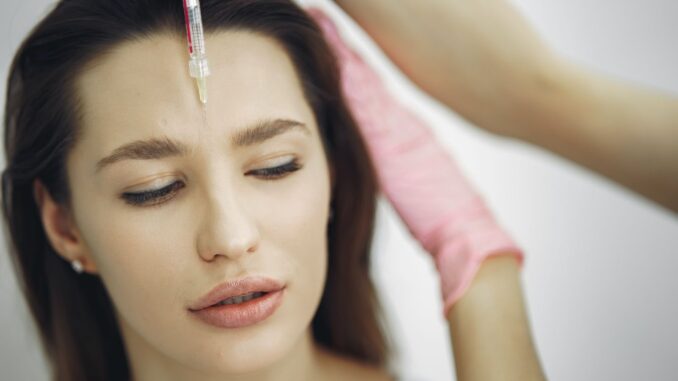
Photo Credit: Pexel
By Mali Sapsed Foster and Chibueze Oyo
An alarming survey has shown that one in three young British people – both millennials and Gen Zers – have considered facial cosmetic surgery in 2022, Patient Claim Line has reported.
“When I was in year six, I was obsessed with getting a nose job. I always thought my nose was too big and wanted to change it,” said Saskia, a 23-year-old Fine Art student and London native who, due to the sensitivity of this topic, declined to provide her surname during interview.
“Seeing women on social media become more famous and adored after getting fillers and surgery made me feel like I was missing something and needed to do the same to feel pretty and valued.”
She admitted to having her first procedure, a lip enhancement, abroad at just 16. The decision, she claimed, was due to the popularity of certain social media “filters” that smooth skin, reduce nose size and enlarge lips.
“I 100% think younger people are getting fillers and surgery to keep up with the beauty trends – which are reflected in social media filters,” Saskia said.
Plastic surgery on the rise
Her statement follows a report by the American Society of Plastic Surgeons, claiming 56,347 cosmetic procedures occurred on people between the ages of 13 and 19 in 2016 – the same year she had her procedure.
“Snapchat filters have definitely given me more insecurities, seeing yourself with more aesthetic features made me feel sad and ugly, as I don’t look like that in real life,” said Saskia.
Taking a breath, she continued: “It made it hard to take pictures without the filters as I felt almost naked without them.”
The widespread popularity of cosmetic surgery has taken mostly young people by storm and has arguably become society’s new normal. For many, the need to look “good” or “better” is fuelled by social media filters, social trends, and celebrities.
This is a sad reality for many teens and young people – as Patient Claim Line also indicated that 41% of its Gen-Z participants agreed that social media filters – especially Instagram and Snapchat – have influenced their desire for cosmetic surgery.
Is it a bad thing?
Sasha, a 25-year-old Medical Aesthetician at Nova Clinic who didn’t give her surname, argues that young people’s interest in cosmetic surgery isn’t just thoughtless thinking.
“I find that young people are more open to cosmetic procedures than any other age group. In the last year, we’ve had a massive influx of 18–25-year-olds wanting to do some sort of enhancement to their appearance,” she said.
She added: “You find the people that come here are really knowledgeable about the procedures they want, whether it’s Botox or a simple filler, they fully understand the treatment and or if their procedures are prone to any side effects.
“For many young people, this isn’t a spontaneous trip, it is a well thought out trip to get what they feel, is an enhancement to their appearance.”
Worldwide trend
The need for young people to elect to carry out cosmetic procedures is arguably a global phenomenon.
As the UK has increasingly strict legislation enforcing the illegality of performing cosmetic injectables and surgery on people under 18, many like Shuker are venturing abroad for procedures.
“I was happy with my fillers from abroad, but you do hear horror stories,” Saskia admitted.
“My advice is to do your research, don’t go somewhere just because it’s cheaper and try to save up for procedures in the UK.”
Whilst patients like Saskia and her friends are content with their post-surgery results, a new audit from the British Association of Aesthetic Plastic Surgeons (BAAPS) has unveiled that the number of patients needing treatment for serious complications following plastic surgery abroad rose by a staggering 44% in 2021, compared to that of the previous year.
A survey conducted by BAAPS council members showed that 100% of complications came from surgeries in Turkey, with abdominoplasty surgeries, commonly known as tummy tucks, accounting for 75% of complications.
(Photo Credit: Pexel)

thank you for making this article very useful and keep up the good work