
by Gianluca Barbazza
Since the beginning of Putin’s attack on the Ukrainian borders, the Western world led by NATO has started a joint counterattack to the Russia economy. This has taken the form of financial sanctions, aiming to slow down or perhaps make the Kremlin re-think about its recent actions.
Countless foreign brands acted within just a few days, by pausing their businesses both online and in store form.
The list keeps on growing, with big corporations temporarily boycotting the Russian market in a sign of solidarity towards the victims of the Kremlin’s attacks. More recently McDonald’s, Starbucks, Pepsi, Coca-Cola and Ikea have joined the big names that paused their operations in Russia.
Fashion world’s reaction to events
Over the past week, Nike and Spanish brand Mango have put a temporary stop to their relationships with Russia, followed by other fashion giants like Hermes, Chanel and mother-companies LVMH and Kering, which own Gucci, Saint Laurent, Christian Dior, Givenchy and Bulgari, to mention a few.
The closing of nearly 125 shops run by Kering and LVMH will mean that hundreds of people will be unemployed for an undetermined amount of time.
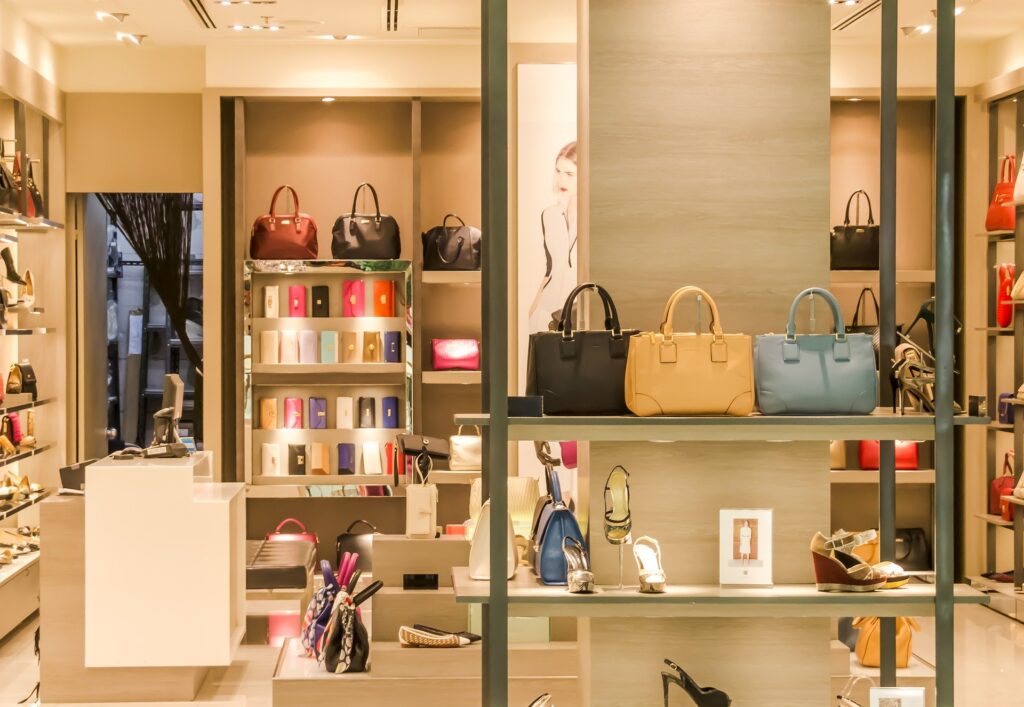
Other brands though, have declined to either comment or take actions like their fellow colleagues did, and decided to take their time to evaluate their next move, possibly in the interest of the business in its entirety.
In a recent interview with BBC, Marusya Koval, Marketing Director for the Ukrainian brand Tsum Kyiv, said that some firms have pledged help but haven’t taken any action yet, adding that publishing on social media “won’t help us to stop the war”.
Koval urged the fashion and luxury industry “to impose sanctions on Russian brands, stores and retailers”.
Following Koval’s statement, fashion sales assistant, Derek Medina, 26, said that pressuring other brands based on personal beliefs will never accomplish anything, especially when it comes to solving a conflict.
Long-term effects
Sanctions, that at the moment have piled up to nearly $1trillion worth of Russian assets, have been described by US experts as a “big deal”, as they are one of the most powerful tools to be used by Western allies against the Kremlin.
But critics say that these sanctions could see the Russian economy slowly crippling down, instead of having the immediate effect that the allies are aiming for, resulting in an “Afghanistan ‘79” all over again.
In regard to the air of doubt around the immediacy of the impact caused by the sanctions, US President Joe Biden said: “We have purposely designed these sanctions to maximise a long-term impact on Russia, and to minimise impact on the United State and our allies.”
Brian O’Toole , former Senior Adviser to the Director of the Office of Foreign Assets Control at the U.S. Department of the Treasury, that said that the delay could be wrongly interpreted by Putin as a positive sign and might give him “some incentive to keep pushing the envelope”.
Counterproductivity of Western sanctions
While the West has grouped up, involving even neutral Switzerland in an historical move that will see the non-member of the European Union adopting EU-like sanctions against Russia, Vladimir Putin opened the doors to Russian’s biggest oil company Gazprom second long-last deal with China. The move followed his visit last month to Beijing with CCP President Xi-Jinping.
According to Bloomberg, the strategic importance of this deal will be seen by 2030, when China’s gas demand is expected to grow by 50%, while current Europe’s consumption, which is also Gazprom’s largest market, shrunk by more than 5%.
But that’s not all.

President Xi-Jinping seems to have found a good ally in Vladimir Putin, hoping that this new deal will allow his country to minimise the effects of Western sanctions on its economy by simply redirecting gas that would originally go to Europe towards China.
China’s super growth in the gas market over the past year has seen the import of natural gas rising by 50.5% as friendship with the Kremlin gets stronger.
Cancel culture – the new trend
Following world governments taking action against Russia, a global outcry has started on the web, where various online platforms and social media began raising the issue and spreading awareness, solidarity, and creating ways to help.
Another current phenomenon, which had been defined by specialists as a “pop-culture trend” which started spreading amongst numerous online and non communities, is the one that sees anything Russian-made or derivative being suppressed or cancelled.
Reflecting on the topic, history teacher Francesca D’annunzi, 39, said that punishing innocents, especially kids, has nothing to do with what Putin’s doing.
She added: “We’re teaching our children to act like bullies: whenever there is an issue, they’ll take it up to anyone but the real threat.”
Electronic Arts (EA), famous for its sports video games, has recently said that due to the current Russian-Ukrainian conflict, it has decided to erase all Russian and Belarusian teams from their platforms in sign of solidarity.
Prestigious Italian University Bicocca in Milan, in the wake of the Russian-Ukrainian events, sent out an email to writer/lecturer Paolo Nori to informed him that his four-session Dostoyevsky course was going to get postponed, only to make a U-turn on their decision after a backlash was created by a video posted by Nori citing the happenings.
In the UK, private schools are debating what to do about suspending fund to Russian families, which would affect their children’s education. Is this a valid method to “hit Russian oligarchs”?
Sanctions against Russia – not Russians
With nearly $1 trillion sanctions against Russian assets, the Western world has condemned Russian people to an uncertain economic future, pushing a lot more families to the edge.
At the Metropolis Mall in Moscow, massive queues of people formed in front of a Tinkoff ATM machine after customers have been told via their mobile banking app that they were allowed to take out dollars.
This chain of events happened right after the Russia’s central bank more than doubled their interest from 9.5% to 20% in order to save the Russian ruble, which had plummeted to US $0.88.
A total of $10 billion was withdrawn from Russian banks in the past week, according to an ABC news report.
Russian ordinary people’s daily lives have been massively affected by the sanctions and the pausing of business by foreign companies.
Banks warned Russian customers that the Apple Pay function could have been experiencing functionality issues delays due to the sanctions, and restaurants have been advised to ask customers to pay cash to avoid any uncomfortable issue with card payments after getting cut off from the SWIFT payment system.
“This isn’t a war by the Russian people on the Ukrainian people,” opposition activist Vladimir Kara-Murza told the BBC.
Leave a Reply