
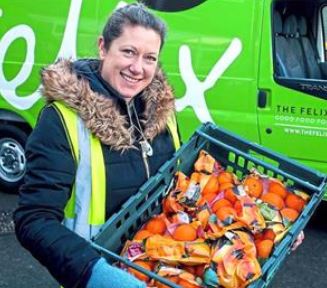
With the slogan “good food for good causes”, who could resist? Certainly not Annie Elkins, who is the Special Projects Manager with The Felix Project, a charity that gets food to the people who need it most.
Elkins, 44, has been working for The Felix Project since the charity started in 2016. She is a master’s degree holder in Nutrition for Global Health, writing about global health and humanitarian relief.
Elkins was was among the distinguished panel of experts who spoke to students and guests yesterday during the Hungry London debate at London Metropolitan University.
All along she’s been passionate about health and building communities, so working at The Felix Project was a dream come true for her. She was the first paid member of staff to receive a job at the Felix Project, which has since become London’s biggest surplus food distributor. Today she works across a variety of projects for the food distribution charity.
Tackling food redistribution
The Felix Project is a London-based food redistribution waste charity set up in 2016 to tackle food redistribution and fighting hunger and food waste. The charity project generates almost two million tonnes of good, edible surplus food each year.
It rescues good, surplus food from the food industry that cannot be sold and would otherwise go to waste. This is high-quality and nutritious, including a high proportion of fresh fruit and vegetables, baked goods, salads, meat and fish. Its remit is to collect or receive food from over 450 suppliers, including supermarkets, wholesalers, farms, restaurants and delis.

During the Hungry London debate, Elkins said that the free school meal pack delivered to pupils in London that generated so much backlash nationwide was a national embarrassment.
“The quality of the food did not look like it was enough. I am not an expert on free school meals and I don’t know the percentage of food, schools in London receives but the package delivered was not worth it,” she said.
“All I know is that it is not good enough and it was embarrassing. You need to see the photos of the quantity of food The Felix Project posted on Twitter that you could get for the same £30.
“Offering food vouchers or money could be a good alternative because not every family has the same food requirement or culture.”
Demand for food increasing
Elkins also said that the demand for food had increased hugely during the pandemic, and they have adapted to the way they work and in doing so they have managed to quadruple the amount of supplies given out.
According to The Felix Project, the latest statistics show us that one in three (4.1 million) children live in poverty in the UK, with an estimated 2.5 million living in food-insecure households, More than 600,000 of them live in London.
“In 2020 we delivered food to 980 organisations across London who support an estimated average of 266,560 people per week,” she said.
“On our busiest day since the lockdown started, we delivered 44 tonnes of food. We were delivering to 600 charities and schools and before it started and most of the people we help are wanting more food.”
Food demands have increased drastically during the pandemic, Charities in the United Kingdom now more than ever are providing food for the hungry and helping parents with kids who are struggling financially to help them remain strong during this challenging times.
For more information about how to donate, please see info@thefelixproject.org
Leave a Reply