
By Mame Sarr.
It’s as expensive as gold – all thanks to a fungal infection. Mame Sarr investigates the West’s enthusiasm for Oud perfume
In the perfume industry, they call it “black gold”. Used by Tom Ford, Louis Vuitton and many more, the Oud scent is taking over our olfactory senses.
The era of flowery, sweet and mild perfumes is now over, as they have been dethroned by stronger and aggressive scents. Oud, the market leader, is today one of the most wanted perfumes in the UK.
Synonymous with luxury and refinement, the strong fragrance has been popular for decades in the Middle East. American fashion icon Tom Ford was the first to introduce the scent to the western society with his iconic Yves Saint Laurent “M7”.
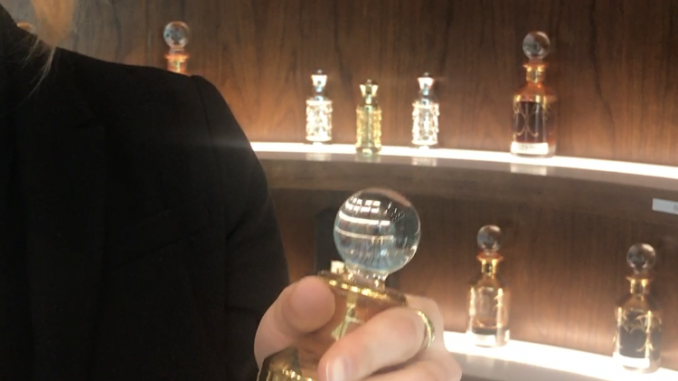
Agar wood, aloe wood, wood of the gods, wood flowing in water. Known in Asian countries under various designations, oud (its Arabic name) has been used for centuries for medicinal purposes, spiritual and aesthetic. 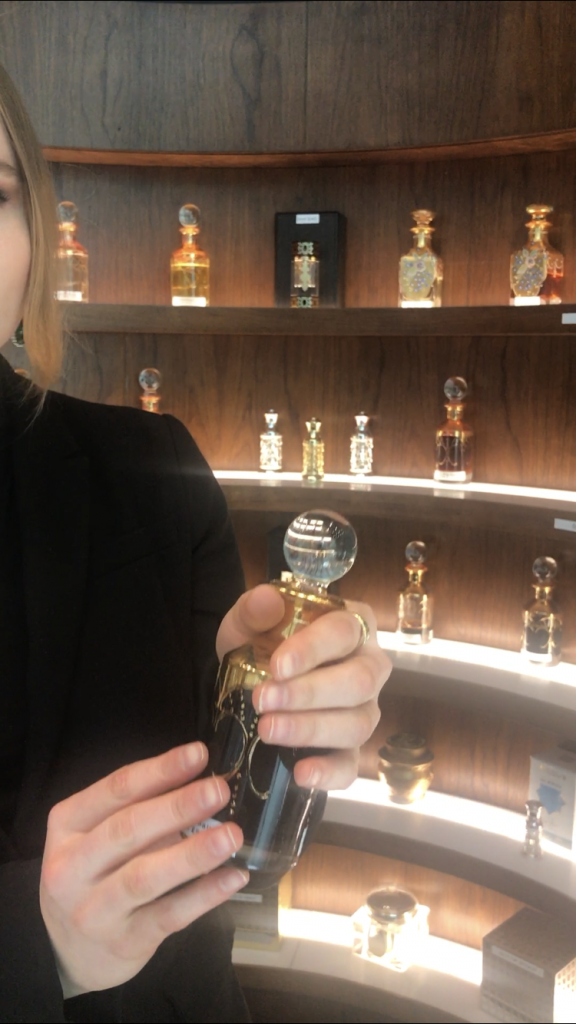
Photograph by Mame Sarr
It appears in one of the oldest texts of humanity, the Indian Vedas, but also in the Bible. Several religions, including Buddhism, burn it to help meditation. In the Muslim culture, it is considered since the 9th century as one of the fundamental ingredients of perfumery. Even today, the Middle East is bathed in oud. In the form of chips, burned on charcoal in the bakhur, it permeates clothes and hair.
Sheikh Abdul-Aziz Al Jaser in Riyad created Arabian Oud ltd, who decided to completely dedicate an entire business to the oil, in 1982. It is now the largest Arabian fragrance house in the world, with 755 stores worldwide in more than 30 countries.

Photograph by Mame Sarr
In the UK only three stores have opened, situated in Westfield shopping centres and Oxford Street. Run by a team of experts, the stores offer a visual and sensory-rich experience to all its customers. And the Oriental design of the shops is catching people’s eyes.
“I’ve never heard about this shop before, but it is amazing. Everything reminds me of Dubai,” said Mahtab Bahrani, 24, philosophy student.
The bestseller, Resala is a perfect blend of Cambodian Oud, Vanilla, saffron and chocolate, which is described as “long-lasting and powerful” by Diana Munteanu, sales assistant at Arabian Oud at Westfield shopping center, West London. A bottle of 12 ml of the finest and oldest oud retails at £875 in the store. This oil has a price that has reached the price of gold.
Full interview here.
Two or three varieties of tropical trees of the genus Aquilaria produce oud. They were at first growing in Southeast Asia, but were destroyed. Only few specimens still contain the precious elixir. The oil is only produced by the tree, as an auto-defense secretion when it is infected by certain bacteria (fungi). But since the infection is happening inside the tree, it is technically impossible to guess which tree contains the oil, so numerous trees are cut down. These Aquilarias are now protected in many countries.
It takes at least six months for the infection to take total possession of the tree. You can re-infect the tree, which will increase the production of oil up to 25%. The parts that not uses for distillation are used in firewood or as incense. Generally, a tree provides an average of 32 ml of oil. This low percentage of oil collected explains the very high price of oud, from £15,ooo to nearly £60,000 per liter for oud ‘vintage’ varieties. Other than the age, other factors are linked to these price changes, such as the color of the oil, its texture or the origin of the tree.
Infographic from Fiveprime
The market for agarwood, whether for oil, wood chips or medicinal applications, is growing rapidly. Latest CITES records indicates that world trade recorded in oud oil in 2012 was 4,870 liters, an increase of 1.512% in volume from 2004, according to Africanplanet.
The main importers of oud oil include Saudi Arabia, the United Arab Emirates, Malaysia and Bahrain. TradeMap’s latest records indicate that world trade in chips and agarwood powder in 2013 was 4.7 million kg, an increase of 878% in volume since 1995. The main importers of Agarwood powder include: Singapore, China, Taiwan, Saudi Arabia and United Arab Emirates, Africaplanet says.,
The popularization of the oil in the perfume industry is because its scent is long lasting. As an oil-based fragrance it will hydrate the skin and also ensures that the fragrance sticks longer to your skin. Oil- based perfume tends to last longer than alcohol-based perfumes, which evaporates quickly.
The demand for the product is also reflecting the popularity of UAE as a holiday destination. Dubai recorded 15.8 million visitors in 2017, a 6.2 per cent increase compared to 2016. While Abu Dhabi richest city of the world, received two million tourists in 2018, so an increase of 5 per cent compared to 2017. Oud is really popular thanks to the influence of the Middle East on the western society at the moment, said Claudia Corut, supervisor of Arabian Oud in Stratford.
A feeling of continuous holiday is pushing people to buy Oud, according to Munteanu. Two out of three customers in her shop discovered oud during their trip to the Middle East, and wish to find something similar.
Very few people are lucky enough to smell the true oud, as almost all oud fragrances in the independent market are synthetic. The true oud is not what we expect, since it is soft and warm without any smell of dry wood or earth that we feel in most of synthetic fragrances. The real oud has warm undertones and a harmonious smell of leather and animal notes.
Most perfumes that claim to be oud-based do not really contain a drop of it. To reproduce it, amber-wood synthesis molecules are combined with other powerful scent such as patchouli, vetiver, incense, woody, earthy, and smoky smell.
So is the iconic Oud Collection launched by Tom Ford Private Blend a scam? What does it matter! We just have to let ourselves enjoy this tender oud with candied rose petals in Oud Flower, or with the honeycomb-almond swirls of Tobacco Oud.
Leave a Reply